How is your yacht affected by MARPOL rules for Ships?
by Peter Dawson-Ball KJ AFRIN FCMI ACIB TEP on 22 Feb 2014
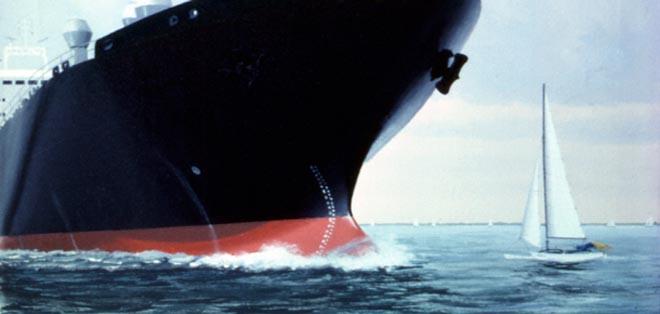
How do THEIR environment rules affect us cruising sailors? SW
The aim of this article, by Ocean Cruising Club member Peter Dawson-Ball, is to take a look at the rules and regulations about the environment that exist for big ships and how these rules and other domestic legislation around the world affect those cruising from county to county. It is not meant to be an exhaustive study; instead, it aims to bring together information from various sources so that readers may better know what to expect on their travels.
Marpol:
Marpol 73/78 is the International Convention for the Prevention of Pollution From Ships, 1973 as modified by the Protocol of 1978. ('Marpol' is short for marine pollution and 73/78 short for the years 1973 and 1978.)
Marpol 73/78 is one of the most important international marine environmental conventions. It was designed to minimize pollution of the seas, including dumping, oil and exhaust pollution. Its stated object is to preserve the marine environment through the complete elimination of pollution by oil and other harmful substances and the minimization of accidental discharge of such substances.
The original MARPOL was signed on 17 February 1973, but did not come into force due to lack of ratifications. The current convention is a combination of the 1973 Convention and the 1978 Protocol. It entered into force on 2 October 1983. As of May 2013, 152 states, representing 99.2 per cent of the world's shipping tonnage, are parties to the convention.
All ships flagged under countries that are signatories to MARPOL are subject to its requirements, regardless of where they sail and member nations are responsible for vessels registered under their respective nationalities. That said, one of the difficulties in implementing MARPOL arises from the very international nature of maritime shipping. The country that the ship visits can conduct its own examination to verify a ship's compliance with international standards and can detain the ship if it finds significant noncompliance.
When incidents occur outside such country's jurisdiction or jurisdiction cannot be determined, the country refers cases to flag states, in accordance with MARPOL. A 2000 GAO report documented that even when referrals have been made, the response rate from flag states has been poor.
The question that this article wants to address is simple. How does MARPOL affect those of our members who are abroad in their yachts?
The easy answer is that MARPOL has no impact on the majority of yachts as, in general terms yachts under 400 GT, carrying less than 15 persons, are not compelled to comply with MARPOL.
Black water (raw sewage) discharges are likely to become less common as, since 2006, the Recreational Craft Directive (RCD) has required all new vessels to have provision for a holding tank to be fitted. In the majority of cases, grey water (waste water from on board sinks and showers) discharges directly into the water and, in the UK, there are strict rules on dumping garbage at sea with substantial penalties for offenders[3] - food wastes may only be disposed of at sea if they have been pulverised and you are at least 3 miles offshore (12 miles in the North Sea or English Channel).
There are rules for ports and terminal operators to provide adequate disposal facilities ashore.
Elsewhere, there are many other countries where the direct overboard discharge of sewage and garbage is prohibited by the authorities. The provision of holding tanks of sufficient capacity to store waste for discharge to shore facilities may be needed for a vessel to comply with legislation in these countries. Here’s a taste of what is typical around the world:
Canada – New Brunswick:
'All pleasure craft equipped with onboard toilets should also be equipped with holding tanks to store toilet wastewater. This storage equipment should have deck fittings and piping for removal of toilet waste at shore-based marine pump-out stations.....When fishing and boating, do not throw garbage overboard. Keep it properly contained until you reach an on-shore disposal site and take any returnable beverage containers to a redemption centre'.
Europe.
The Baltic:
As with international conventions such as MARPOL, the Helsinki Convention (HELCOM Convention on the protection of the marine environment of the Baltic Sea Area) must be implemented in each of the participating countries through their national legislation. Therefore although HELCOM extends regulations on the discharge of sewage to all ships including pleasure craft, this is not yet law in all the HELCOM contracting parties: Denmark, Estonia, Finland, Germany, Latvia, Lithuania, Poland, Russia and Sweden.
The latest information the RYA has regarding national legislation is as follows:
Denmark:
Boats built before 1 January 1980 do not have to have a holding tank and can discharge sewage when 2 nautical miles from the shore.
Boats built before 1 January 2000 but after 1 January 1980 which are either less than 10.5m LOA or have a maximum beam of less than 2.8m do not have to have a holding tank and can discharge sewage when 2 nautical miles from the shore.
Boats outside of the above exemptions, including all boats built after 1 January 2000 must have a holding tank that can be emptied through a deck fitting.
Finland:
The discharge of untreated sewage is prohibited at a distance of less than 12 nautical miles from the nearest land i.e. within their territorial waters.
Germany:
Boats under the German flag or that of another HELCOM signatory nation which were built after January, first, 2003 with a toilet on board must have a toilet retentions system in line with HELCOM recommendation 22/1.
Pleasure boats under the above mentioned flags, built between the named dates and having a toilet on board must have a toilet retention system if they have a length of more than 11,50 metres (Lh) and a width of more than 3,80 metres. If they fall below either this length or this width they do not have to have a tank.
It is possible for pleasure boats which exceed both measures to get an individual exemption if they prove to the competent authority that the fitting of a holding tank is technical impossible or the costs are economically disproportional.
Sweden:
The RYA understands that the discharge of sewage is currently prohibited within 500m of land. A complete ban on the discharge of black water within Swedish territorial waters (12 nautical miles) is under consideration and may come into force from 1 April 2015.
.............
The Mediterranean:
Spain:
Spain has holding tank requirements which together with their pollution legislation, essentially mean that vessels cannot discharge untreated sewage within Spanish territorial waters (12 nautical miles). The Spanish legislation is ORDEN FOM/1144/2003, 28 April which for anyone who speaks Spanish can be found at www.fomento.es and an unofficial translation of the legislation is also available on the RYA website.
Greece:
In Greece the regulations relating to discharges and pollution make a holding tank a practical necessity although we are not aware of them being a legal requirement as yet. Caution should also be exerted with grey water in Greece.
Turkey:
Discharge of any kind may be considered illegal. A black water tank has therefore been a practical necessity in Turkey for many years. New rules have been coming into force in some areas of Turkey (such as the Mugla District) over the last few years which require vessels to carry a Blue Card. If the rules are enforced to the full all black and grey water will need to be collected and pumped out ashore; the Blue Card will be used to monitor the amount of waste water deposited ashore to ensure holding tanks are pumped out rather than emptied into the sea.
...................
Elsewhere:
Netherlands:
Since January 2009 it has been prohibited to discharge black water (toilet waste) from all pleasure boats on all inland waterways, lakes, the Waddensea and territorial waters. Pleasure boats can be installed with holding tanks, dry or chemical toilets or boaters could choose simply not to use their toilets.
France:
French law requires that as of 1 January 2008 new vessels, whether French or foreign flagged, are fitted with a treatment system or retention tank for black water if they wish to have access to French ports, moorings and anchorages.
Users of older vessels which are not equipped with treatment systems or holding tanks for black water are, like all other pleasure yacht users, required to comply with the rules which prohibit discharge in ports and designated anchoring spots. They must therefore use shore toilets.
................
How these rules are to be applied or enforced is not very clear but it is anticipated that guidelines or a further law defining the extent and manner of application and any sanctions will be issued in the future.
In principal it is forbidden to flush toilets into canals and rivers, but as pump out facilities are few and far between until now discreet overboard discharging has been tolerated, this may of course change.
By the way, every ship of 100 gross tonnage and above, and every ship certified to carry 15 or more persons, and fixed and floating platforms are required to carry and implement a garbage management plan that specifies procedures to be followed to ensure proper and efficient handling and storage of garbage. This plan includes the use of placards or notices which advise crew on the ship’s garbage procedures, use of Garbage Record book etc.
The current understanding is that these rules have yet to be implemented as the various member states, including the United States, have not yet produced rules on the wordings of these placards (even though the IMO has produced a sample placard).
Acknowledgement:
Thanks to Frances Rennie for her assistance with this article.
About the Ocean Cruising Club:
The Ocean Cruising Club is an international club for blue water cruisers administered from the UK. The distinctive blue and yellow burgee with a stylized Flying Fish is a welcome and respected sight in any anchorage. Founded in 1954 by the late Humphrey Barton, the Club known affectionately as the OCC exists to promote long-distance cruising in all its forms. It has no premises, regarding the oceans of the world as its clubhouse. However, it enjoys visitors' rights with a number of major clubs world-wide.
If you want to link to this article then please use this URL: www.sail-world.com/119502