Interview - Andy Horton, Star Sailor on the Olympic campaign trail
by US Sailing on 3 Jun 2010
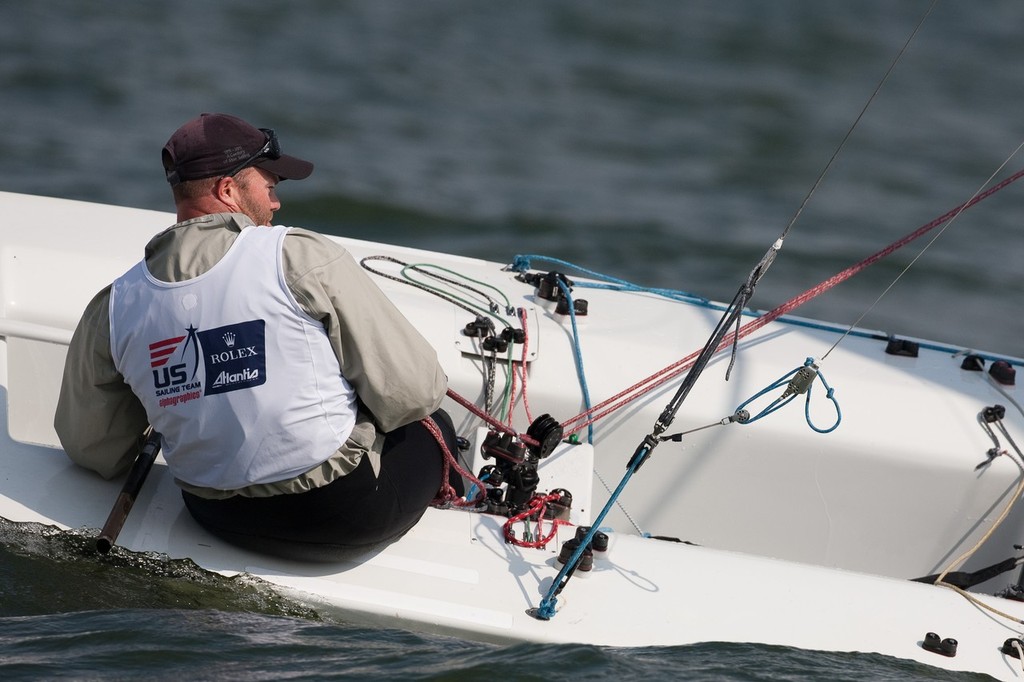
Medemblik - the Netherlands, May 28th 2010. Delta Lloyd Regatta in Medemblik (26/30 May 2010). Day 3. Star - Delta Lloyd Regatta 2010 Sander van der Borch
http://www.sandervanderborch.com
Interview with USSTAG’s Andy Horton, Star class.
After winning a bronze medal at the Delta Lloyd Regatta, the fifth International Sailing Federation (ISAF) Sailing World Cup event in the 2009-2010 series, Andy Horton talked to US SAILING about what he likes most about sailing Stars, what he’s doing differently in this Olympic campaign, and shares some key tricks of the trade for all sailors and athletes alike.
US SAILING: What do you like most about sailing Stars?
HORTON: Number one, it’s the competition. I think it’s the best racing in the world. The second thing I like is the technical part of the boat. And third, the camaraderie in the class is pretty tight. Those are the three big things.
US SAILING: What do you like most about the technical aspects of the boat?
HORTON: One of the things I love about the Star is that it has a lot of technical options and space. There are many different boat builders and sail makers, and everything is quite changeable. You can tune the mast in 10 different ways and positions. You can build your boat in your backyard if you want; I like that. It’s intriguing. I like constantly learning and trying out new techniques. The boat is really about balance. It gives you feedback to make it go fast, in terms of setting up the masts and sails in variety of conditions. I like learning about it and figuring out why the boat is acting a certain way, or why other boats are passing us.
US SAILING: The Star is known for being a very physical boat. Can you please explain?
HORTON: The Star is actually more of a dinghy than a keel boat. The boat is active and lively and powerful, so it’s quite fun to sail. The sails are big. The boat is powered up in 9-10 knots of breeze. So the person who hikes the hardest, typically is the fastest.
US SAILING: How important is your physical strength in handling the Star?
HORTON: We need to be pretty strong for sure… to be able to handle it well in breeze. If you’re lighter, you give up. You need to be able to hike upwind and downwind as the skipper – you end up hiking the whole time, in fact. In order to do that, you need strong core and upper body strength.
US SAILING: What’s your fitness regime off the water in order to achieve this strength?
HORTON: I suffered a herniated disc in my back in January, 2007, when I was sailing the America’s Cup on Luna Rossa. When I got home, I started training with Chris Poulin, who owns Poulin Performance here in Vermont, and he helped me fix my injury and prevent future injuries. After four months of core training, I was stronger than I was when I was lifting weights for two years. Chris is just unbelievable – he takes a holistic approach to core strengthening and conditioning. James and I work out with him at least once a week; he’s a part of our team.
I also do a lot of running. James has been my coach since 1998 in the Star and Soling, and now he has started crewing for me. He says he can see my improvement: The year I started running with my wife, who runs marathons, my hiking fitness took a huge step forward. Running gets all your muscles going. I run 4-5 miles a day and sometimes 8 miles.
US SAILING: How does your wife help you, in terms of motivation and support?
HORTON: My wife is awesome. She’s a nutrition editor for a food magazine called Eating Well, and she’s a registered dietician. She knows all about food and eating right while training. The biggest thing [I’ve learned] is recovery eating within 30 minutes after a workout to replace the glycogen sugars in your muscles. If you eat protein within that time frame, your body still thinks you’re working out, so the next day you’re not tired.'
US SAILING: What types of protein do you bring with you on the boat after a long day of racing at an event?
HORTON: We try to keep the food to a minimum because it’s extra weight on the boat. So we make sure to eat a bar on the way in to shore, so we can recharge for the next day. My wife makes the best bars at home, which we call Maple Go Fast Bars.
US SAILING: What do you eat for dinner while you’re competing in Europe?
HORTON: It’s hard to get fruits and vegetables on the road. We try to stay at fewer hotels and more houses and bungalows where we can cook ourselves. When you eat in restaurants, you can’t pick off the extra butter or cheese they add.
US SAILING: What’s your favorite food to make during a regatta?
HORTON: Steak. I save my red meat intake for when I’m competing. I recover better the next day when I eat it.
US SAILING: Speaking of recovery, how do you take care of your muscles after a long day of competing?
HORTON: When I’m traveling, I try to do some type of active recovery, like jogging, while I’m racing, and then ice. Ice works better than any other pharmaceutical, and you feel much better about the side effects. When I was on Luna Rossa, I did contrast therapy. I’d come in off the water and fill a big trash can with ice water. I’d plunge right in up to my arm pits for three minutes, get out and warm up. And then I’d do it again. It was amazing.
Another way you can do contrast therapy is in the shower with hot and cold water. You get the water as hot as you can stand it for 20 seconds, then turn it as cold as you can stand it for another 20 seconds, and then repeat with hot water again. You have to end on the hot water cycle. Your muscles expand with the temperature change, and it pumps all the lactic acid out and brings new blood flow into the muscles. I also stretch my hamstrings while I’m doing it. The process can fix injuries and prevent you from being sore the next day.
US SAILING: How did you and James join forces for this Olympic campaign?
HORTON: James has been a friend and traveling with me as a coach for many years now. He has seen the way I sail and talked through situations together, so it was a natural progression. There are many great things about James and his experience, but it’s also important he lives here in Vermont, so we can train a lot. During my last campaign in 2008, between my back injury and sailing America’s Cup, I wasn’t in the Star boat for eight out of 12 months of the year. We’d go to the events a couple days early and train. But if you look at the rest of the world, they’re sailing Stars every day of the year. There’s a balance: We have to train with other people before regattas, but we need to log our hours in the boat together, up here in Vermont.
US SAILING: Many people probably wonder how you can train all year around in Vermont. How long is your season?
HORTON: We’re sailing from the end of April until as long as we can. It’s chilly in December but you can sail in November for sure. We keep our boat at the Lake Champlain Community Sailing Center, which has a great program for high schoolers and a hoist. It’s about 10 minutes away. We watch the weather on the web cam – when there’s wind, we go sailing. We try to go 3 to 5 days a week if we can.
US SAILING: What’s next for you on the Olympic class circuit?
HORTON: Our next Star event will be Kiel Week in late June and then the Sail for Gold Regatta at the Olympic site in August. Along with all of that I'll be doing a little racing on Hap Fauth's boat, Bella Mente, and with Kip Meadows on his Melges 32, Roxanne.
www.ussailing.org
If you want to link to this article then please use this URL: www.sail-world.com/70278