
Trans-Tasman solo sailor says thorough preparation key to survival
by Eduan Roos/Yachting New Zealand 4 Jun 03:31 PDT
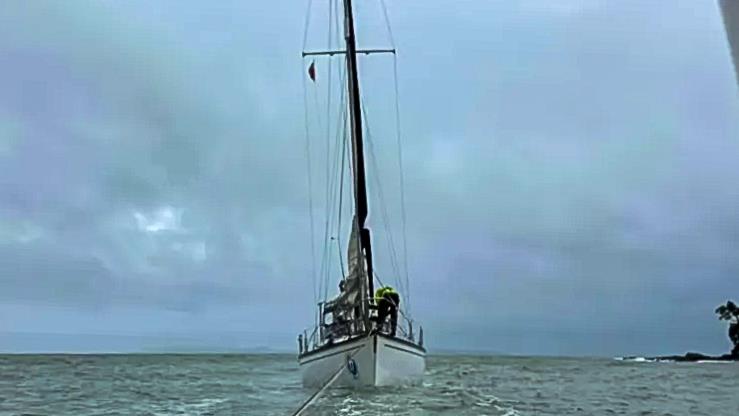
Robbery is towed in by Coastguard after getting water in her diesel fuel - Solo Trans-Tasman Yacht Challenge - May 2026 © Coastguard NZ
When water started pouring into his yacht in the raging Tasman Sea, Graeme Francis found himself confronting the scenario every offshore sailor hopes never arrives.
A day from land and hours from help, in darkness, heavy seas and gusts exceeding 50 knots, the veteran yachtsman was battling unexplained flooding, a failing engine and lost communications alone aboard his beloved Robbery.
The 36-foot monohull began taking on water on Sunday afternoon, just under 24 hours after Francis and 14 other competitors set off in this year’s Solo Trans-Tasman Challenge — a gruelling 1,200-mile single-handed voyage from Opua in the Bay of Islands to Southport, Australia.
Exhausted after hours of manual pumping and unable to trace the source of the ingress, Francis began to consider abandoning the vessel.
"At one stage I thought, 'this is getting a little bit real now,'" he said. "I got the life raft ready to deploy if I had to. My God, they're not light. I also had all my emergency supplies and grab-bag ready, and I was thinking about how I'd have to get the life raft over the side and get into it if it came to that. It wasn't going to be a pleasant job."
The 69-year-old New Plymouth Yacht Club sailor — a veteran of more than 19,000 offshore miles and a four-decade association with the race — activated his emergency position-indicating radio beacon (EPIRB) and notified race control that he was turning back.
"I've done a few miles at sea, and when you've done a bit of sailing, you're mentally prepared for what could happen," Francis said. "In the seven months of preparation for this race, I'd played out thousands of scenarios of things that could go wrong and how I would respond, but taking on that much water wasn't one of them.
"I wasn't scared, but I was certainly concerned. My main worry was where the water was coming from and what was going to happen next."
For the rest of this story click here