
How can clubs thrive?
by Mark Jardine 4 Feb 07:00 AEDT
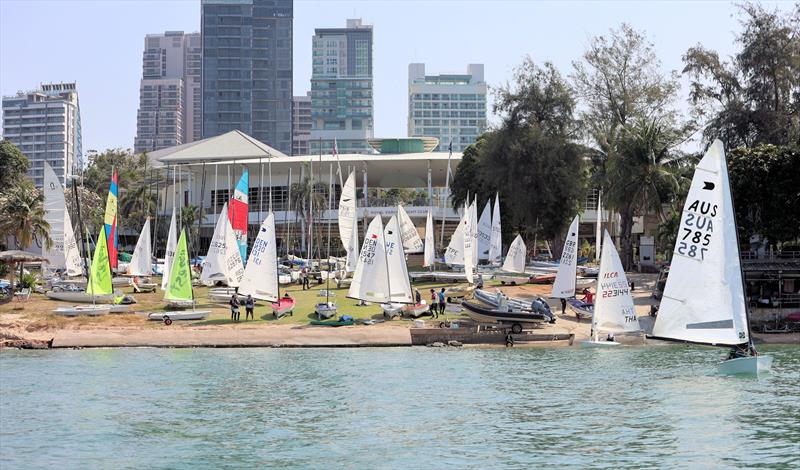
The Royal Varuna Yacht Club clubhouse on day 3 of the Open Masters Championship 2026 © Henry Weidmann
While a sailing club exists primarily for its members, and must first and foremost serve their interests, it also needs to at least break even financially to remain viable.
Clubs are also most often run by their members on a voluntary basis. Some of the committee members come in with vast business experience, while others a huge amount of enthusiasm, and many with a combination of the two. These committees are pivotal to the future of sailing, as the myriad of clubs throughout the world are the lifeblood of the sport.
Like it or not, that break-even point is becoming harder and harder to attain for many clubs, as pressures on people's money and the cost of goods and services increase. Everyone is looking for value for money, trying to squeeze more out of less, while also wanting the best facilities and service. It's a tricky equation to balance.
The key in many cases is trying to make the best use of a club's facilities for as many days of the year as possible. This is done by a variety of methods, including hosting training, be that courses on and off the water, maximising the use of the bar and restaurant, renting out facilities for talks, seminars or special occasions, and also hosting open sailing events.
Having just competed at the inaugural Royal Varuna Yacht Club's Masters Championship, I was very interested to hear how they are approaching the conundrum. While being in one of the most idyllic spots on the planet, the questions the committee asks itself are no different to many others, and it is continually looking at ways to make better use of its facilities whilst never forgetting the primary goal of serving its members.
Here are a few of the approaches they are taking, and discussions I had with them as to what they could do in the future.
The club is committed to growing the sport in Thailand, and has nurtured young sailors who have progressed all the way to winning world championships and competing in the Olympics, and has very active junior and youth sections which help the next generation get their first taste of life on the water. Without a stream of new sailors, sailing has no future, so this must be a key pillar for all clubs.
The food at the Royal Varuna Yacht Club is something else. Granted I need little persuasion to try the dishes as I love Thai food, but the catering really is superb and also covers pizza and western dishes for those with other preferences. At weekends the club is busy with members, but this can become quiet during the week, so looking at ways of attracting people to eat at the club on weekdays is high on the agenda.
An obvious way to do this is hosting sailing events, such as the Masters Championship I just attended. The club was buzzing with people from all around the world, and the club members seemed keen to meet and chat with us all, which seemed like a good thing for everyone.
While it's possible to sail in Thailand all year round, the primary season is regarded as December to early May, and this is when the club looks to host events; some of the sailors competing these past few days were using the time to learn more about the local conditions ahead of the 2027 International OK Dinghy World Championship.
For those coming from cooler countries, where winter sailing is less common, and a darn sight less enjoyable, sailing in Thailand is bliss. The water is warm, the sun is shining, and the wind is pretty reliable and enough for foiling in boats like the Switch most days. There's even a bit of tide to play with and make things interesting.
Coming over for a regatta at the Royal Varuna Yacht Club feels like an event and holiday rolled into one, while at the same time extending the possible sailing season if you're not inclined to sail throughout the winter at home. I'd sailed once this year before travelling over for the Masters, in the traditional Keyhaven Yacht Club Rum Race to celebrate the new year, and I enjoyed not having to crack the ice off my mainsheet in Thailand...
After competing for three days I feel enthused for the season ahead. There are areas of my fitness I want to work on before jumping back in the boat in the UK, and I've learned a lot about how to set up my ILCA 7 sail in a variety of conditions, especially when changing gears. I feel like I've come out of the event a better sailor than how I went in, and that's always satisfying.
Talking of learning, the club hosts training camps, generally where a nation's squad come together to train as a group, staying in the club's accommodation. With training rooms available coaches can debrief the sailors at the end of the day.
The way a club can use its resources varies from place to place and depends heavily on their own situation, but maximising its use can have a profound impact on its viability, and successful diversification can lead to better facilities, which in turn benefit the primary users, the members.
The greatest gift of all in travelling to clubs and events around the world is the opportunity to meet sailors from other places and learn from them. Conversation is easy as we already have the common interest in our love for sailing; hearing how they learned, what kind of sailing they now do, and their thoughts on the future of the sport, is inspiring. The collective knowledge, and what led them to continue sailing after their teenage years when so many tend to give up, is the key to growing long-term participation.
Hearing their solutions to familiar problems made the world feel like a smaller place. Like we were coming together to celebrate sailing when some of the strife in the world makes it feel like the distances between us all are increasing. It was cathartic all round.
I'm going to take what I've learned back into the next round of RYA Connected webinars, where we look at club success stories. There is opportunity out there for sailing, which means there are opportunities for people with no connection to the water to enjoy sailing, which is good for everyone.
Heartfelt thanks to all the volunteers and staff at clubs who make the vital decisions in moving clubs forward, and those who facilitate running events and all the ancillary things which happen around the sailing. The sport simply wouldn't happen without you.
Mark Jardine
Sail-World.com and YachtsandYachting.com Managing Editor