Five rough weather sailing tips for balance and control
by John Jamieson on 20 Jul 2013
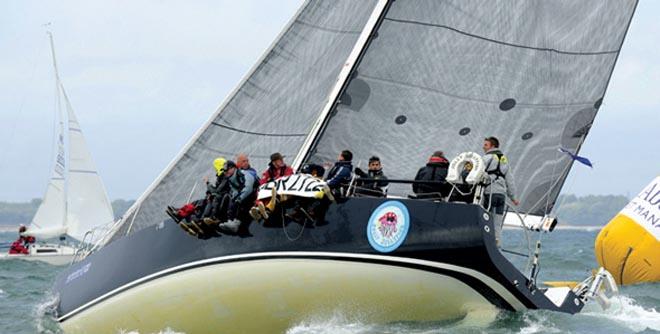
Having your rail in the water might look exciting, but it isn’t fast sailing SW
Learn to sail with ease by maintaining just the right amount of weather helm on your boat. Too much and you will fight the helm with 'white fisted' effort that will wear you down and slow the boat. Too little weather helm makes the boat feel lifeless. Put the following advice into play for more speed, power and performance.
Keep the rail clear of the water. Friction causes the boat to slow and pivot toward the wind. Follow the five tier strategy below to pump up sail power and performance.
Sail to windward and you will feel the tug on your sailboat wheel or tiller. You want your boat to head toward the wind just a bit--called 'weather helm'--so that it has a feel to the helm.
As the wind increases and the boat begins to heel, the boat will want to 'round up' toward the high side--or windward side. Weather helm increases as heeling increases.
Heeled way over with crews hiked out to windward and the rail in the water may look like fun--and it can be. But, it's not efficient. Flatter boats are faster boats. Dig the leeward rail beneath the waves and you can bet that you will slow down and your weather helm will increase.
Digging the rail into the water increases hull friction and causes the boat to want to pivot toward the wind. This results in a 'two-fister' helm you have to fight to keep on course. Steer like this for a while and even the best helmsman will wear down in no time.
You want to reduce or reef sails early enough to keep the boat sailing with minimum heel. This action will flatten the boat, decrease the amount of steering necessary to keep on a sailing course, and increase sailing performance (forward drive and speed).
Famous sailor and author John Rousmaniere states that about 3° should be the maximum off-center that a wheel or tiller should be held. Use this as a benchmark; some boats may require a bit more than this. But in any event, the helm should feel light and
it should be easy to maintain the sailing course with just fingertip pressure. This applies in all weather--from the lightest zephyr to extreme conditions.
Now to the five tips - Fast sail trim with a 5-tier strategy:
Reduce weather helm and heeling with this five tier strategy. Follow the order of the tier or find the best mix to keep your sailboat weather helm right for your boat. Jump over steps of the tier as necessary to meet the conditions at your location.
1. Increase weight to windward.
Depending on what kind of boat you have, move your crew to windward to reduce heeling and flatten the boat. This may be harder with short-handed crews. Go to the next steps.
2. Ease the Mainsheet and Genoa sheets.
Crack off on the mainsheet and Genoa sheets an inch or two. This opens the top of the sail (called 'twist'), to dump high velocity wind up high. As the wind increases, go to the next step.
3. Slide the Mainsheet Car to Leeward.
Use this often-forgotten strategy to de-power the mainsail further. Racing sailors will often keep the mainsheet trimmed, but ease the car along the traveler track as the wind increases. This keeps the leech trimmed and the boat driving.
4. Move Genoa Sheet Blocks Aft.
Tension the foot of the Genoa to twist the top of the Genoa. Slide the block aft to do this. Keep the top of the Genoa open to maintain forward drive. (Note: roller furling raises the clew as you furl. You will need to move the block forward as you furl to keep the leech under control).
5. Reduce Sail Area (reefing; smaller headsail).
We've all heard the 'reef when you first think about it' rule. Not many actions balance a boat faster than reefing. Think of reefing as a balancing tactic, not a heavy weather strategy. Remember that most roller furling sails are not meant to be flown in heavy weather. Work out a system now so that you can hoist a smaller hank-on headsail in high wind conditions.
You will improve your sailing performance when you reduce weather helm and trim your sails to meet the conditions at hand. Sail faster and gain more power when you sail your sailboat flatter--wherever in the world you choose to go sailing!
~~~~~~~~~~~~~~~~~~~~
John Jamieson (Captain John) with 25+ years of experience shows you the no-nonsense cruising skills you need for safer sailing worldwide. Visit his website at www.skippertips.com. Sign up for the Free, highly popular weekly 'Captain John's Sailing Tip-of-the-Week'. Discover how you can gain instant access to hundreds of sailing articles, videos, and e-Books!
If you want to link to this article then please use this URL: www.sail-world.com/112175