Gybing, an art form in heavy weather
by Nancy Knudsen on 29 Oct 2011
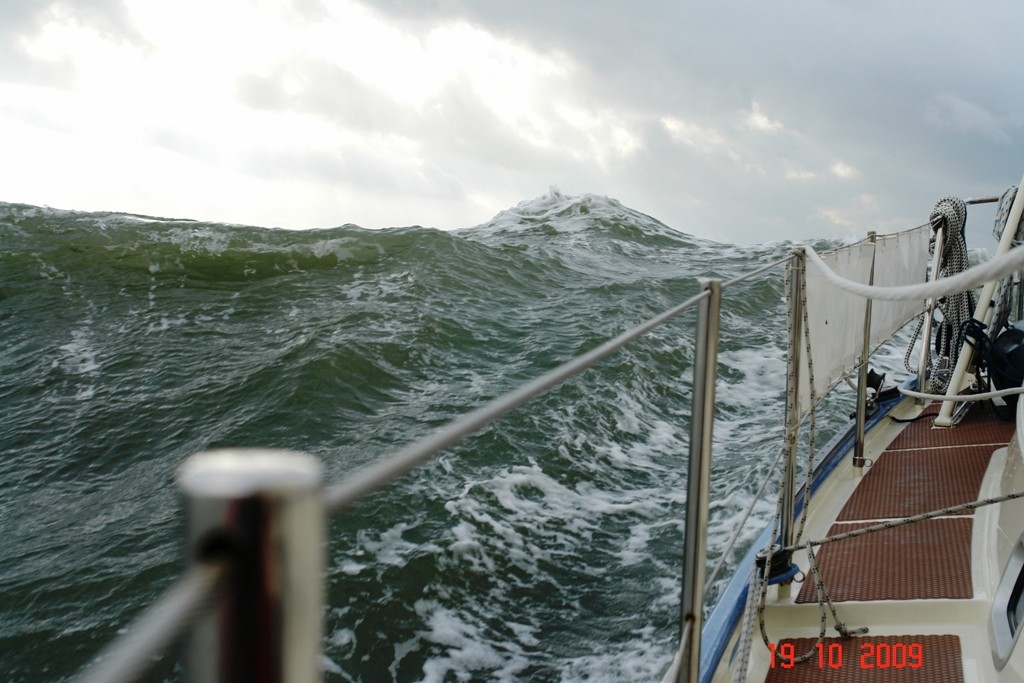
Gybing in heavy weather can be a challenge for the short-handed cruising sailor SW
Gybing, an easy task in a light breeze, can be the manoeuvre in heavier weather that makes the short handed crew the most jittery, and for good reason.
Most sailors with some experience have shared stories of out-of-control gybes that rounded up the boat, damaged the rig, or, worst of all, ended with one of the crew in hospital. So for a short-handed crew what are the key elements to handling a gybe safely in heavy weather?
Early decisions:
There are decisions in preparing to gybe which the skipper must make, taking into account the size and behaviour of the boat, the number and skill of the crew, and the weather conditions.
At the most conservative end of the scale, the skipper may consider that limitations on board make a gybe unwise and will choose to do a 'granny' - take the boat in a full circle the wrong way round so that one tacks the boat instead of gybing. Alternatively, a prudent skipper who finds him or herself in a bad blow with a single or novice crew may simply wind the sails in and motor through the gybe. While this is always a disappointing decision to have to make, it is preferable to ending up with damaged boat or crew.
A little less conservative is the decision to take the headsail in and gybe with the main only. This focuses the attention of the available crew on one sail alone, and is an easier manoeuvre with limited crew on board.
Being reefed helps the gybe:
In heavy weather, according to the decision of the skipper, the boat will be reefed. One loses little speed by reefing when the wind is up and the side benefit is that the gybe is made easier and more controllable.
So what about the operation of the gybe itself? There are a few rules in a standard gybe that go towards a successful completion.
The role of the vang:
First, before gybing make sure that the vang is on tight so that the boom cannot lift and main is kept steady in its movement across the boat. You don't want the sail to twist, the bottom to gybe before the top, as this can have disastrous results.
Steering through the gybe:
The first element of gybing, steering the boat through the gybe, would seem to be the simple part, but the helmsman needs to be constantly aware and working together with the crew handling the sails. A helmsman is not sensitive to what the crew is doing can make the gybe more difficult than necessary.
Gybing the main:
The mainsail is a big sail and, dependent on the size of the boat, can be very heavy. The prudent way to gybe in heavy weather is to wind the main into the centre, but so that the boat keeps enough momentum to make the turn. Once it is in place, the helmsman makes the turn and the main crosses the boat in a small movement. Once there, the crew must let it out in a controlled fashion but as quickly as possible to unload the helm and begin to drive the boat again.
Gybing the headsail:
At this point the headsail, if it has not been wound in, is back-winding, and must be let off with the greatest amount of speed, while winding it in on the other side. Naturally, if there are more crew on boat, this action should be undertaken simultaneously.
The value of an autohelm:
A boat with an autohelm which includes a self-tacking feature is a great boon to a short-handed crew in heavy weather. Nothing changes except that the helmsman is freed to assist with the sails during the gybe, making the movement smoother, quicker and more under control.
Prudence rules:
Always take the course of least potential loss. Prudent gybing maintains the integrity of the boat and keeps the crew safe.
Obviously the key to mastering this or any other technique on board your short-handed boat is practice. Take a day sailing when the wind is moderate and practice heavy weather gybing, over and over again. The advantage of this is that you will also learn a lot about the behaviour of your own boat and how it reacts in a gybing situation.
A well-gybed boat in heavy weather can give so much satisfaction!
In this article we have not addressed the issue of gybing with the spinnaker still flying. This is a quite a challenge with a short-handed crew, hardly ever done by long range short handed cruising sailors, and the risk factors need to be carefully considered.
If you want to link to this article then please use this URL: www.sail-world.com/90086