
New WASZP Speed Record set at 31.0 knots
by WASZP class 22 Apr 01:46 NZST
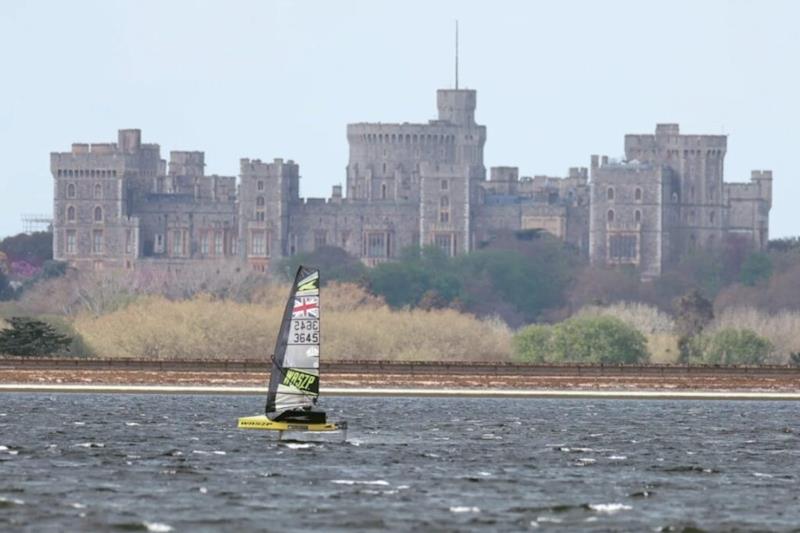
Toby Smith sets new WASZP Speed Record at 31.0 knots © David Dyson
Teenage British sailor Toby Smith sends it into the record books
A blustery weekend in the UK has delivered a new milestone for the WASZP class, as British young gun Toby Smith pushed the limits to clock an incredible 31.0 knots, setting a new class speed record.
There are moments in sailing that are planned to perfection - and then there are moments that simply appear.
For Toby Smith, the new WASZP speed record didn't come from a carefully orchestrated attempt. It came just after the finish line.
"I'd just crossed after a race," he recalls. "I looked behind me and saw this huge gust rolling down the course. And I thought... this might be the moment."
What followed was instinct, commitment, and a willingness to push beyond comfort.
"I threw in a jibe-there must have been about 35 knots of breeze-set the boat up quickly, put my shoulders out, shut my eyes... and just went for it."
Seconds later, Smith had rewritten the WASZP record books: 31.0 knots.
The Next Gen is Now
Racing out of the Royal Hospital School Sailing Academy in Suffolk, Toby is part of a strong junior U18 pathway showing how far the WASZP class has spread across the UK youth sailing scene.
His record-breaking run took place in Datchet during the UK Start of Season Championships, where conditions delivered the perfect window for speed.
Looking ahead, Toby has his sights set on the upcoming European Championships set for early July in Mar Menor, Spain. Pending school commitments, he will be there to push at the highest level of youth foiling competition.
When Speed Becomes a Feeling
At those speeds, numbers come second.
"It just felt fast," Smith says. "I'd only been over 30 knots once before, so I knew it was close. I looked down at the end of the run on Vakaros and saw the number"
31.0 knots
Despite setting the record, Smith is clear-this isn't the limit.
"There's definitely more speed to be had," he says. "How much there is is still unknown, but I think around the 34 knot mark could be possible."
Part of that comes down to setup.
"When I set the record, I wasn't set up for speed. I would have set up the boat slightly differently."
And part of it is conditions.
"Having colder water is a lot harder to set the record in, so maybe in the summer I can try again. Flat water is also a big factor, and obviously, the wind has to be the right strength."
"There's definitely loads of factors that contribute, and I think they can certainly get better."
"It's Just the Need for Speed"
The record didn't come out of nowhere. Smith has been building towards it.
"About a year ago, actually, I hit 28.4 knots down in Weymouth. That was my first real taste of how fast the WASZP can go."
From there, the progression continued.
"I went out about January time and got 29.4 knots."
Then more recently:
"About two weeks ago, I went out and set the then-fastest record of 30.4. And about a week later, Connal Green got 30.9 at the WASZP Australian Championships."
"And then obviously last weekend... I hit 31."
So what kept him chasing it?
"Well, obviously I'm pretty competitive, so it's always good to be number one," he says. "Yeah, I don't know really-it's just need for speed, I guess. Chasing adrenaline."
Setup, Control and Safety
As speeds increase, so does the level of precision required.
"Traditionally, with the old foil, you'd want a fairly deeper sail to get more power," Smith explains. "But now actually, we're getting to the speeds and the boat is getting so efficient that you actually want to start flattening off your sail when going for speeds to reduce drag."
"You're trying to go as high as possible, so having a flatter sail will suit the angle better."
Beyond sail shape, reliability is critical.
"The foils, it's important to double-check everything. Make sure they're really stiff before you go out. Any wobble in any parts of the boat can cause a big crash, which is starting to get quite dangerous."
And it's not just about the boat.
"There's physical preparation as well. Stretching beforehand, gathering yourself, staying hydrated so you're focused, it's all important."
No Glance Needed - Vakaros Had the Magic Number
While the speed was confirmed on his Vakaros Atlas, it wasn't something he could rely on during the run itself.
"At the time of the run, you can't really afford to look at it," he says. "You've just got to do one run, and probably get it by the end of the run. If not, just go for another one."
Still, the device plays an important role.
"It's super accurate, so you know what speeds you've hit. There's little variation when you upload the data."
"I've come to know the Vakaros quite well, so I kind of know what to expect when I have a look at the data online. But it's very good to have that reassurance."
"Now I don't want it to be taken away"
After months of chasing, the record is finally his.
"It's been a long, tough way to get it and secure it. Now it's official, it's pretty cool."
But the mindset doesn't stop there.
"Now that I've got it, I won't want it to be taken away. So I've got to keep going and keep pushing for a better record, I guess."
And if he had to describe the run with one word?
"Fruity."
With the new benchmark set at 31.0 knots, the ceiling hasn't been reached yet-at least not in Toby Smith's eyes.
"There's definitely more speed to be had."