
LA 2028: The Data Driving the Olympic Cycle
by Cyclops Marine 20 Mar 03:30 PDT
27 March - 4 April 2026
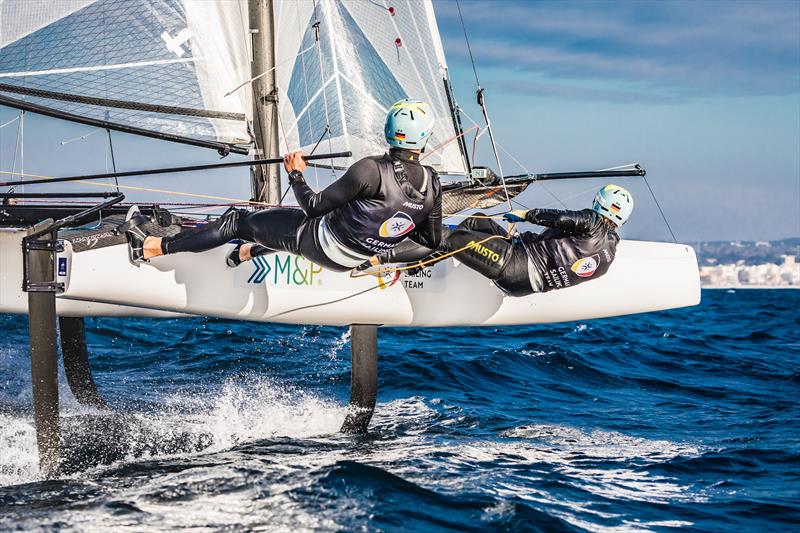
German Nacra 17 Sailors training with Cyclops Sensors © DSV / Lars Wehrmann
The first Olympic class regatta of the new season, Trofeo Princess Sofia (27th Mar - 4th Apr), is a landmark in the sailing calendar.
It's the ultimate opportunity to take stock of the fleet and what's defining the Olympic cycle so far.
For some, it's when they dare to start dreaming; for others, it's a reality check. But one way or another, everyone finds out how much value they've got from winter training and the data they've collected and refined along the way.
The Data Is In
Data analysis is the area where Olympic sailing jumps forward furthest each cycle. Especially with the growing availability and value being provided by load data - the quickest shortcut to improved boat speed.
The Paris cycle saw significant investment in this area from leading federations, including GBR, GER, NOR, SWE, AUS, AUT, FRA, ITA, USA, ESP, NED, SUI, JPN & CAN. From a federation perspective, load data offers huge value, allowing coaches to compare information from different boats and crews through the same system - pushing everyone to get better, comparing adjustments and excelling as a team.
Many Olympic champions and top performers of years gone by have used data provided by Cyclops load sensors - including Ruggero Tita (Nacra 17), Dylan Fletcher (49er), Daniela Moroz (Formula Kite), and Helene Naess & Marie Ronningen (49erFX).
As a training and tuning tool, it allows sailors to find and repeat their own fastest settings in any given conditions. Adding visual markers to control lines enables them to replicate these again on the race course.
What Are They Looking At?
Over a short space of time, coaches work closely with sailors to build a set of fast settings for each control, considering the nuances of the boat they're in, and other factors like their build and strength.
Training with the sensors in all wind conditions and sea states allows them to see the effects on loading in real time and during post sail analysis - making them experts in identifying when they're under or overpowered. This puts them in the best position to react quickest when things change mid race, or across an event like Trofeo Princess Sofia.
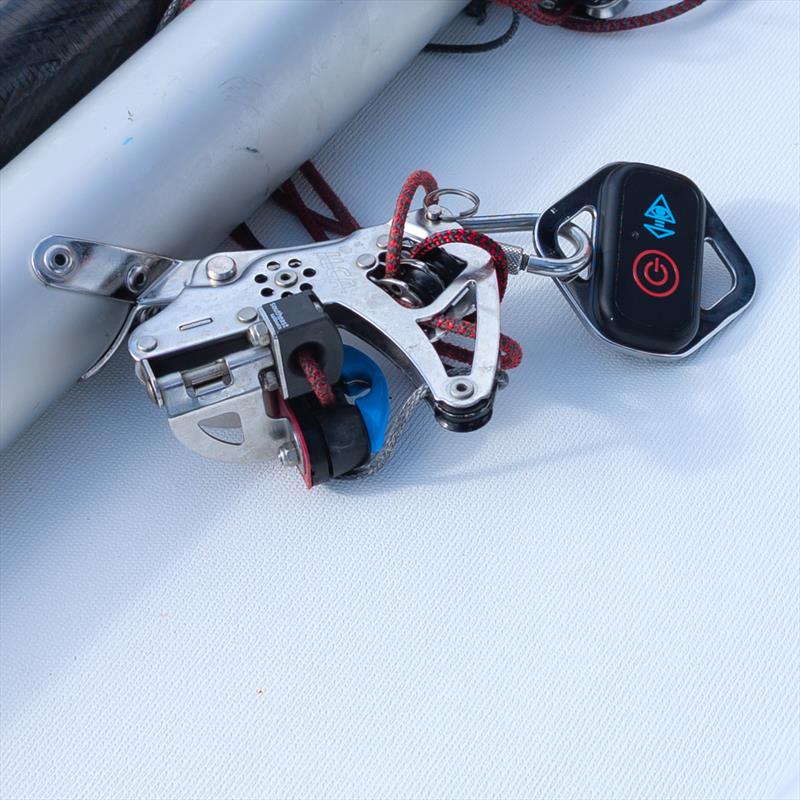
smart
link² Atto ILCA Vang/Kicker attachment - photo © Cyclops Marine
Harnessing the Data
As well as being available live on the water via the free Cyclops app, Vakaros Atlas 2 and via software upgrade on the new Sailteck GPS Compass, the range of post-sail analysis tools that support Cyclops load data are also growing.
The Cyclops app offers logging for post-sail analysis. Sailors and federations also integrate load data with other inputs that affect VMG, like heel, pitch, and GPS. There are a range of fantastic apps that let you do this, like SailViewer and Vantage. Both seamlessly integrate Cyclops data and offer great features that make analysis simple and valuable, also allowing you to share and compare.
Many sailors use video overlay to see how their loads were impacted by their actions while sailing. This feature is available through SailViewer and other services like SailNjord.
Affordability and Access
While data has become easier to harness through new apps and other tools, it has also become much more affordable to capture. During the last Olympic cycle most sailors used smartlink Nano sensors. Since then, Cyclops Marine has launched smartlink² Atto, which provides the same data at half the price.
Load sensing is no longer reserved for Olympic federations and is now being employed at all levels of the sport.
Explore the Cyclops range or contact an expert.