
Could the decline of Linear TV benefit sailing?
by Mark Jardine 9 Dec 2025 10:00 PST
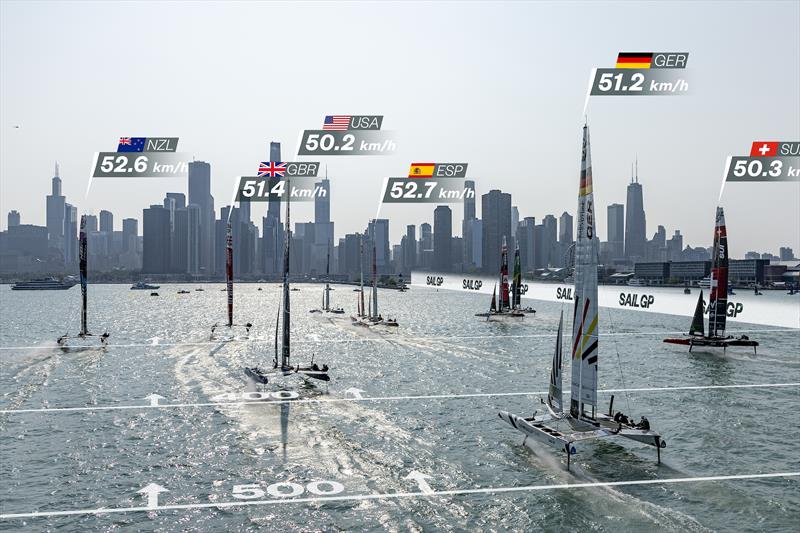
Graphical overlays have revolutionised sailing coverage on TV © SailGP
I really enjoyed the highlights of SailGP this season. When there's wind it is exciting racing with some of the best sailors on the planet battling it out on identical boats. Even the Grand Final weekend in Abu Dhabi, which for the most part saw the F50s lowriding, was a great watch for the three-boat two million dollar race, as just enough breeze came in to get them foiling.
The problem was, I didn't watch any of it live, though I would have done if I could on YouTube, but TNT Sports have the rights, so it's blocked. I know I could have got round this with a VPN, but paying for another subscription was a step too much for me. I know it's the same for many people who may have Netflix, Disney+, Amazon Prime, and heaven knows how many other streaming providers there are now. They can't justify one more package just to watch SailGP, which is a shame.
I understand when the big football matches are on subscription services. The demand is so high for them, and the rights to show the games are sold for astronomical figures, but restricting the viewing for sailing events, even when it's something which has broken the boundaries like SailGP, seems counter-productive to me. Channels like the BBC simply can't compete for the major sporting events nowadays, and even they now promote iPlayer above their linear channels. Sporting events on a free-to-air linear channel are going the way of the dinosaurs.
From the sponsor point-of-view, the SailGP teams, the events and the series sponsors are all looking for bigger reach and impact. There are some global brands involved now, and they know how to do their research on who's watching. They need their sponsorships and activations to work. Getting the coverage out to as many people as possible will help do this.
From sailing's point of view, right now, we need to get our sport in front of as many non-sailing eyeballs as possible, with the hope that some of those people watching will become sailors themselves. It's all very well being a spectator sport, but SailGP will wither on the vine without the grassroots coming through. I've often heard that sailors are not the target audience of SailGP, and it's all about the entertainment, but it is important to keep the sailors engaged. If we're passionate about it, then we can share that enthusiasm with our non-sailing friends and hopefully they start to think sailing is 'cool', or whatever word is now used to describe it as such.
With TV watching now being so distributed amongst the many networks, I believe sailing needs to concentrate on the platforms which will bring it the most eyeballs, without them having to pay for the live coverage. Yes, SailGP already does an awful lot of short format video on the social channels with six second videos titled 'the moment X nearly CRASHED into Y' which no doubt get a gazillion views, but to really engage people they need to be watching the actual racing.
Back at the beginning of this article I mentioned how I watched the SailGP highlights, as I didn't have the streaming subscription I needed. We actually get the full replays from events a couple of hours after the racing has taken place on YouTube, but generally I don't watch it as I already know what has happened. The live coverage really does need to be watched live, otherwise it's like watching a film where you already know the twist. The thrill, anticipation and emotional investment is gone, and with it the sense of belonging evaporates.
Fan bases are built on this. The idea that you've been on an emotional rollercoaster with your team is what makes you truly bond to them. When you've watched it live, you then want to hear from the sailors afterwards to understand what they were thinking at key moments. Without that, the thrill is gone, and it becomes a watching and analytical experience rather than a visceral one - leading to a shallow relationship.
Having attended the Portsmouth SailGP as a fan this year, I must applaud the fan experience in the grandstand. The experience was a lot of fun with the razzmatazz of coloured smoke flares as the teams finished, T-shirt cannons and lots happening on the big screens. It made for a great day out, and left me feeling happy. Having 10,000 spectators all cheering made for one hell of an atmosphere and there were, without doubt, non-sailors in the crowd who enjoyed the experience. How many of those though have a TNT subscription? If they don't, then it's unlikely they can be converted from curious to long-term fans, and that feels like a missed opportunity for SailGP and, furthermore, a chance to attract more people to sailing gone.
So what's my suggestion? YouTube. It worked for the America's Cup, and it works on a smaller scale for countless other sailing events. Over a billion hours of YouTube content is watched on TV's every day worldwide, and it accounts for over 13% of U.S. TV viewing time, and 14% in the UK, and this trajectory is only going up. That statistic doesn't even take into account watching habits on mobile devices and computers.
Right now, the SailGP YouTube channel has huge variance in the viewing figures on their videos. Their weekend highlights from the Mubadala Abu Dhabi Sail Grand Prix have already had an immense 5.5 million views, while the Après SailGP: Grand Final Breakdown analysis show, which has some really good thoughts on it, only saw 4 thousand views, which suggests to me that the fans on the channel aren't that deeply invested yet. I produced a quick winning move video for our @Sail-World YouTube channel, which has now had over 15 thousand views. My analytics, and personal belief, is the reason we've outdone SailGP on this one is due to our audience being emotionally invested in sailing at a very deep level.
There is so much that SailGP is doing right, but inevitably when you have a fast-growing product there are errors along the way, and I believe not having SailGP free-to-air globally on YouTube is a miscalculation. The series and the teams need to develop diehard fans, who become sailing's best ambassadors. The sailors need to become the heroes that the kids look up to and want to emulate. It is happening, but it can happen on a larger scale, which will lead to an explosion in popularity, and that will lead to more people trying sailing themselves.
To become truly mainstream, SailGP needs to reach critical mass, and while the level reached is higher than anything we've seen before, bar maybe the 1987 America's Cup, I don't believe it's at that point yet.
I'm very much coming at this from a 'what is good for sailing' standpoint, which is inevitably influencing the opinions I've written above, and I know there are minds far greater than mine at SailGP working out what's best for them, but I truly believe the decline of linear TV and the rise of YouTube is a wave that sailing needs to ride.
Mark Jardine
Sail-World.com and YachtsandYachting.com Managing Editor