
Marine mammal risk strategies for ocean races and events
by Marine Mammal Advisory Group 1 Nov 2025 08:05 PDT
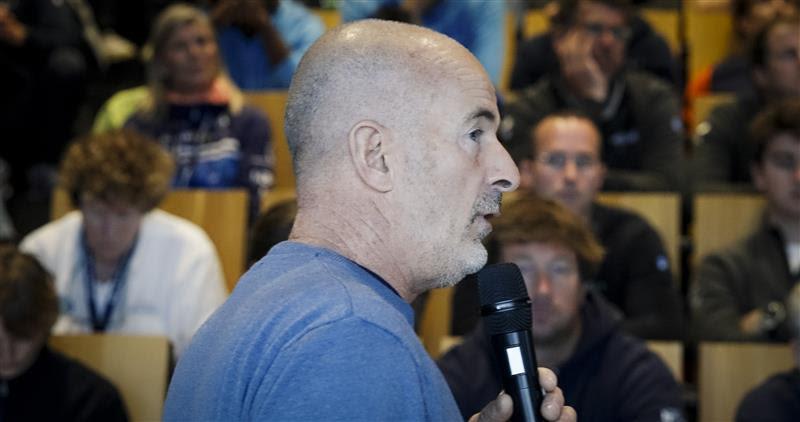
MMAG co-founder Damian Foxall presenting at Transat Café l'Or Skipper Briefing © Julien Champolion / Polaryse
As the frequency and scale of ocean racing events continues to grow, the Marine Mammal Advisory Group (MMAG) is supporting all stakeholders in conservation efforts and risk mitigation concerning marine mammal strikes.
The MMAG team has been on-site at the Transat Café l'Or, working alongside race organizers, classes, and teams to deliver comprehensive marine mammal risk mitigation strategies and skipper briefings.
These proactive measures are part of MMAG's growing support framework across international sailing events. Earlier this year, MMAG also collaborated with The Ocean Race Europe, conducting a data and risk density assessment with local marine scientists to identify "hot spots" and migratory areas of concern for certain species along the race route.
We continue to be inspired by sailors' enthusiasm for ocean stewardship! Many teams have shared marine mammal sightings on social media, cited whale species identification resources, and followed reporting best practices. Several sighting reports were submitted through the Marine Strike Log embedded in the onboard ADRENA navigation system, as well as the Whale Alert App, which is available free for anyone who wants to contribute to citizen science and marine life monitoring.
Learn more about the free resources and support we have available to our cohort below.
New resource: MMAG Communications Strategy
We are proud to launch the MMAG Communications Strategy, a comprehensive guide for proactive and crisis communications related to marine mammal risks and strike incidents.
This resource includes:
- Clear response flowcharts for sightings or strike events
- Communications strategies to inform proactive and reactive responses to situations
- An FAQ appendix with MMAG-recommended statements
- Supporting data and references on relevant topics
This toolkit aims to help event organizers, teams, and communications professionals handle sensitive marine life issues and incidents responsibly and consistently.
Contact us at if you'd like to receive the MMAG Comms Strategy resource.
Managing risk: Insurance spotlight on conservation
Pantaenius Insurance recently spotlighted MMAG in their latest edition of Yachting News, in the feature "From Collisions to Conservation".
The article explores how awareness of marine mammal strikes is changing the culture of ocean racing and yacht operations. As MMAG Co-founder Damian Foxall shared: "We can be the canaries in the coal mine to not only collate the information on where this is happening, but our smaller boats are a fantastic testing ground for the technologies that are being implemented or piloted on ferries or bigger ships."
The story traces Foxall's journey from professional sailor to ocean advocate, describing how early collision experiences at sea inspired the founding of MMAG.
Today, MMAG's work is guided by 6 strategic pillars:
- Source & share information
- Risk assessment
- Technical solutions
- Live reporting & citizen science
- Education & outreach
- Matching solutions with resources
Through the Marine Strike Log Survey, MMAG continues to collect critical data on vessel interactions with marine life. Over half of reported collisions involve both vessel damage and harm to animals. This data that helps identify high-risk zones and informs mitigation planning.
"Five years ago, it would have been impossible to imagine that ocean races would even identify exclusion zones," Damian continues. "Now it's become part of the protocol to consider where the areas of risk are and to identify if it's possible to avoid them."
Read the full article here.
How you can take action to protect marine biodiversity:
The Marine Mammal Advisory Group is a global cohort of stakeholders in the marine industry. Here's how you can take action to be part of our mission and goals to reduce marine mammal strikes in the sailing sector:
- Live Reporting: Download the Whale Alert App for live hazard reporting and data.
- Share the Marine Strike Survey: to encourage network to be citizen scientists and record any prior marine strike they've experienced in MMAG's survey.
- Create Event Biodiversity Plan: utilize MMAG's free template resource to develop a detailed biodiversity plan. Contact us to officially join the Group, and receive free resources and guidance.
- Communicate: whether you are a sailor or event leader, it is critical to communicate the information that can help reduce and prevent marine mammal strikes. Share alerts, raise awareness about local species, and communicate your biodiversity plans and reporting procedures to your network.