
When to reef on a catamaran
by Cyclops Marine 24 Jun 2024 08:52 PDT
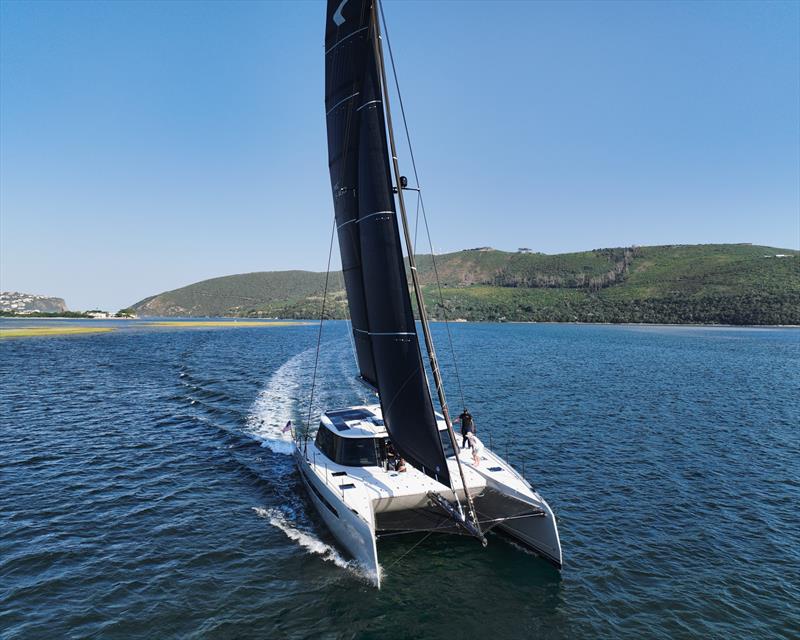
Kinetic Catamarans KC54 © Kinetic Catamarans
Whether you're an experienced sailor, or you've picked it up in later life, catamaran sailing comes with its own unique challenges - not least when it comes to deciding when to reduce sail.
While the stability of multihulls offers extreme comfort, it also means that they heel much less than monohulls, providing less clues around safety level and raising the quandary: when is the right time to reef your mainsail?
The answer will vary depending on factors like yacht design, weight, and the preferences of sailors, but one thing is constant - the need to stay safe and protect your equipment.
Whatever you're monitoring to indicate when to reef will be combined with other visual and "feeling based" cues like resistance on the helm or rudder angle, but ideally you should act to depower your rig before these show up. The more reliant you are on subjective judgement, the less sure you can be of absolute safety.
Wind Speed
Wind speed is the metric you'll find used most often. When you purchase your catamaran it will come along with the manufacturer's recommendations of when to reef based on a maximum wind speed - usually with a first reef at approx 18 - 20 knots.
While the effect wind speed is having on your rig and sails is a key factor, there are major limitations to this approach as it doesn't account for other key variables:
Sea State
It should come as no surprise that rough seas can increase the strain on your yacht and its components, layering load on top of that exerted by wind speed alone. And, if loads are escalating, so too is the likelihood of breakages and dangerous accidents.
It's also possible that manufacturer estimations based on max wind speed are conservative (to account for a range of sea states). So, there may be instances where wind speed exceeds the recommendation, but a calm sea state means that you can continue to enjoy sailing safely and smoothly for a while longer.
Point of Sail
Point of sail also significantly influences when you should reef. Each point of sail requires specific sail adjustments, because different angles lead to a significant difference between apparent wind speed and rig loading. I.e. if you're close hauled you may need to reef earlier than if you're off the wind.
Gusts
As every sailor knows, the wind can be unpredictable, and hugely variable. If you're adjusting your sail set up based purely on wind speed, you may be adjusting a lot!
If you only follow wind speed guidance, you will tend to reef to the gusts and spend most of your time wallowing in the median and lull wind speeds. You have bought a magnificent stallion and you don't want to be riding it like a cart horse!
Cruising cats are about enjoying life onboard, and as the actual loads being exerted on the rig will often be more stable than the speed of the wind, it's likely that you can sit back and relax more often than you think.
Load Monitoring
If you're trying to monitor all of these variables simultaneously, your rig may not be the only thing that's overloaded!
Keeping an eye on so much with any degree of accuracy is very difficult. The simple solution is monitoring the one key variable where all of the above manifests - the loads running through your rig.
Increasingly popular onboard catamarans, load sensors replace existing shroud turnbuckles or pins, simply screwing on or dropping in to provide a complete picture of the dynamic balance of the rig.
Connecting wirelessly to existing boat electronics and via smartphone apps, sensors instantly allow sailors to view live load numbers (with assured accuracy of within 1%) through centralised displays which show raw numbers or an intuitive dial, with green, amber and red indicators showing safety level and providing visual queues of when to reef.
Brent and Ana of Lagoon 440 'Impi' have sailed all over the world using load sensors. They explain brilliantly why this method trumps wind speed alone:
Check out more Cyclops sailors like Parlay Revival and Sailing SV Happy Together on YouTube.
Beyond Reefing
Load sensing is widely used in a racing context, from the America's Cup, to the Vendee Globe, to weekend dinghy sailing. This extends to some of the world's premiere racing catamarans, such as the line honours winner of this year's Round the Island Race, Gunboat 80 'Highland Fling' and prolific offshore racer-cruiser 'Allegra'. But you don't have to be a racer to enjoy the performance benefits - by checking your load numbers (and colours) when you're sailing nicely you can create a set of repeatable settings, allowing you to enjoy easier, faster sailing - getting there quicker, with confidence in the safety of everyone onboard.
Sensors also extend the life of your equipment and monitor whether anything has gone awry with your rig. If you have sensors installed by your catamaran manufacturer, you have full assurance that your rig is where it should be when you start sailing - with the added ability to return to these default settings in future.
Cyclops sensors are also installed onboard the world's largest aluminium sailing catamaran, floating art gallery ArtExplorer - helping her keep precious masterpieces safe inside, and sailing efficiently port to port. This technology is present across the full spectrum of sailing cats, with leading manufacturers like Kinetic Catamarans, HH Catamarans, Gunboat, Nautitech Catamarans, Balance Catamarans, Privilege Catamarans and more offering them as OEM upgrades.
They are also available through a global distribution network as retrofit solutions. Contact Cyclops Marine or visit the website to learn more.