Why You Should Add an Isolation Transformer to your Boat
by Canadian Yachting on 1 Nov 2011
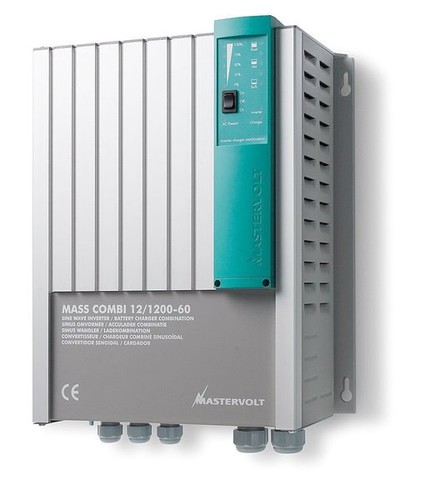
The American Boat and Yacht Council (ABYC) who sets most of the construction and safety standards for boat builders and repairers, recommends any vessel with shore power connections should have an isolation transformer. Canadian Yachting
First, if you just remember one thing from this article, remember - never swim in a marina. Why? Because in a marina, you have people, water and electricity. When everything is working properly, that is a recipe for fun and great times. But, if just one wire chafes through its insulation and shorts to ground, there is the potential for tragedy.
Every boat owner owes it to his boating friends to maintain his boat and to ensure there are no electrical shorts, but that is difficult. When something goes wrong, we will not necessarily know it and we can experience a tragedy.
On June 27, 2005, Samantha Chipley and her friends Margaret, Susie and Courtney, arrived at the Scott Creek Marina on Cave Run Lake in Eastern Kentucky. The girls were planning on spending the night on a houseboat owned by Susie's father. It was a very hot June afternoon and the four girls jumped into the water.
Although there were 'No Swimming' signs that warned of the danger of electrocution, it was common practice for patrons to swim at the marina. At the time of the incident, Samantha and Margaret were in the water swimming while Susie and Courtney were retrieving inflatable toys from another boat nearby. Samantha tried to climb on a raft with Margaret when she suddenly started jerking in the water. Margaret jumped off the raft to help Samantha and felt a shock go through her entire body.
The other girls were able to pull Margaret to safety, but they watched helplessly as Samantha was shocked for several minutes while she struggled to stay above the water. Another boater dove in to save Samantha. He was shocked too and barely escaped with his life. Sadly, Samantha died.
How could this happen? The boat’s wiring system had lost a ground wire. Stray current was finding a path into the water.
This happened in fresh water. Some people think that fresh water does not conduct electricity the way salt water does. True ¬– fresh water has lower conductivity however, a human body is much more conductive than typical fresh water in a lake or river, so when there is current flowing in fresh water, the person can become the 'ground'. Salt water or fresh water – you are still at risk of drowning if electrical current is flowing into the water.
Your boat, or your neighbour’s boat can be perfectly OK leaving the dock, but it is possible for a wire to vibrate loose, or to chafe and short as the boat pounds over the waves. A heating element in the hot water tank can bend to touch the tank side. Elements in a heater or toaster can short from a ride in rough water. Any loss of correct wiring can result in current taking a different and potentially dangerous path. Very often, the breaker will not trip, yet the electrical field is now in the water.
Another source of danger is the do-it-yourself boat owners who, without satisfactory levels of technical knowledge, attempts to modify his or her electrical systems, or wire up some new piece of equipment. Incorrectly wiring an appliance, or accidentally driving a screw through a panel and into a wire on the other side, can reroute the power. The results are the same.
We spoke to Jeff Kaiser, Engineering Manager at Charles Industries, manufacturers of marine electrical systems and components. To help us understand this in simple terms, Jeff explained that first, the 'earth' and the water can be modeled as a large ground. In the event of an electrical fault on a boat, any conductive component like a prop shaft, a fitting or even a whole metal hull, can become part of the circuit as the electricity searches for a route to ground through the water around the boat. When someone enters the water near a faulty boat, they too become part of the electrical circuit and can experience electrocution.
In other words, electrical current will form an electrical 'pool' around the boat. If a person dives into the electrical pool in the water, they can become the 'ground' even without grabbing a metal dock post or another conductive structure.
While investigating this story, we learned that it doesn't take much current to have an effect. We obtained a chart of Ground Fault Effects. At 1 milliamp (ma) a person will feel a tingling sensation. At only 15 ma he or she can experience paralysis and drown. At 60 ma, heart failure is imminent.
The reason we wanted to publish this story at the beginning of the season is because more and more boats are being equipped with air conditioning, TVs and home-sized appliances. Power needs are far higher than for boats built 20 years ago.
Now, let’s be very clear. The danger comes when a boat that has experienced a short or fault is connected to shore power. Away from the marina shore power, for example when swimming at an anchorage, you are unlikely to be in any danger because there is no route for the current to find a path to earth. Remember, electricity must have a complete circular path. With shore power, the shore power system is connected to earth. The path is from the power pedestal, through the shore power cord, into the faulty system, out the prop (for example) and completes the route back to earth through the water that may only be a few feet deep in the marina.
Even with your generator running, a faulty system and with the metal prop in the water as before, there is only one path to earth, so there is not a complete round trip. The swimmer is in no danger here (at least until the boat reconnects to shore power.)
I’m not trying to scare you into giving up boating! But my goal is to absolutely convince you to never swim where there is shore power.
Next, there are a few easy steps you should take to ensure everyone’s safety.
The American Boat and Yacht Council (ABYC) who sets most of the construction and safety standards for boat builders and repairers, recommends any vessel with shore power connections should have an isolation transformer.
Isolation transformers are available from Charles Industries, Mastervolt, Marinco and others. With an isolation transformer on your boat, the electrical malfunction no longer creates an electrocution hazard in the water.
As Jeff Kaiser explained it, the power is conducted through a 'magnetic field' inside the isolation transformer rather than across a solid wire connection, effectively breaking the dangerous electrical connection through the water to 'earth' or ground.
When properly installed, an isolation transformer will electrically isolate the AC shore power from the boat's AC power system. There is no direct electrical connection between earth-grounded shore AC power and the onboard electrical system. The shore ground is connected to a shield that is wound between the primary (shore) and the secondary (boat) transformer winding. The connection of this grounding wire only to the shield of the transformer 'isolates' the boat's AC electrical system from shore. This then results in the elimination of in-water shock hazards.
As an added benefit, the nature of an isolation transformer also eliminates the stray galvanic currents from boat to shore that destroy your sacrificial zinc anodes, so your polarity alarms and galvanic isolators are no longer needed.
Then, there is the Charles Iso-Boost Automatic Marine Isolation and Boosting Transformer. You might prefer one of these because long dock runs can cause voltage drops or fluctuations in the shore power supply that can damage your equipment. A 'boosting' unit provides all the magnetic power transfer benefits of an isolation transformer, plus automatically 'boosts' low or fluctuating voltages from the dock.
The intended main purpose for an isolation transformer is to provide absolute safety when a fault occurs.
It just makes sense (considering what you have spent on your boat anyway) to add an isolation transformer. Of course, we don’t need to remind you of the value of your friends and loved ones.
That is why we also recommend that all onboard electrical work be carried out by a properly qualified technician. Look for the NMEA Certification at your marina or dealer repair shop.
At the start of every season, replace your zincs. While Jeff Kaiser tells us that your new isolation transformer will reduce the 'shore to boat' corrosion by 80% to 90%, he also reminds us that the remaining 20% still requires sacrificial zincs. These are inexpensive. On a big boat, replace them annually.
A new isolation transformer is a great addition to your boat but we want to leave you with one last reminder – never swim in the marina!
For more articles like this, go to www.canadianyachting.ca!
If you want to link to this article then please use this URL: www.sail-world.com/84973