Stopping Dinghy theft - The four basic rules
by Nancy Knudsen on 29 May 2007
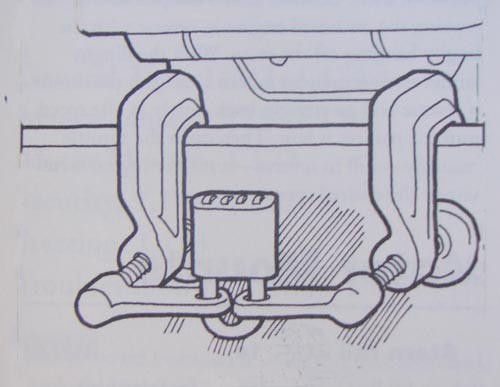
Dinghy locking device - watch the rust BW Media
Where you are boating in the world determines how vulnerable you will be to dinghy theft. In La Ligna anchorage near Gibraltar theft is so rampant that it has turned into a business operated by scouts with mobile phones.
These watch for a dinghy to be tied to the shore, notify waiting minivans, which arrive with bolt cutters, and within 15 minutes of the unaware cruiser's leaving the dock, the dinghy is gone to a workshop where it is re-badged then carted over the border to be sold. In this anchorage we were advised not even to leave our dinghies in the water, and if hauled out, lock them to the boat anyway.
On the other hand, in some anchorages, the locals have been known to be greatly upset by the sight of a visiting cruiser locking their dinghy, implying that the locals are not to be trusted. Sometimes it's just hard to explain. 'Well do you lock your car?' 'Yes of course' 'Well, it's just like that – we're used to locking our dinghy everywhere – no reflection on you.' Sometimes this works, but not always.
So how much of the advice here will apply to you will be a factor of the environment in which you sail, although some is just good common sense Here are the four basic rules that will ensure that you have the best chance of NOT having your dinghy stolen:
Always lock it. A 7-10 metre length of lifeline with an eye on each end plus two rustproof padlocks is one method of locking your dinghy. Cruisers who have had bad experiences or who are just plain cautious use a heavy chain to the same effect. At the dinghy end, loop the wire or chain through something secure on the dinghy itself, not on the outboard motor – this way you can lock your dinghy when not using the motor.
Always hoist it out of the water at night, either on your davits, or use the halyard to lift the dinghy, running spring lines forward and aft to secure it. If you have an anchor winch, this is useful for raising the dinghy without effort – or any suitably placed hydraulic winch. Otherwise, depending on the size of the dinghy, it's pretty muscle building.
Always lock your outboard motor to it – it's apparently the outboard motors that are often the attractive item, so no matter how well a dinghy is secured, it's a matter of seconds to remove the outboard motor. There are several ways of approaching this:
The most secure method is by purchasing one of the plastic coated locking bars that are available at many marine stores, or on-line from West Marine. They will also lock it to the yacht's rail. The advantage of these is that the lock is encapsulated in the mechanism and cannot be sawed off. The disadvantage is that they are not manufactured for marine use (how dumb is that?) and rust quickly. We have met one cruiser who had had a stainless steel version manufactured using the bought rusty item as a model – great idea.
Replace the plastic clamp handles found on most motors with stainless steel and then thread a lock directly through them Such a lock is, of course, vulnerable to being cut with bolt cutters.
Run a short length of chain through the lifting handle and secure it on the dinghy to a transom eye-bolt or some other secure fitting. This method is also vulnerable to a bolt cutter, but should slow the bastard down.
Wreck it.Don't run around in an obviously new shiny dinghy. Some methods of aging a new dinghy that have been used are:
File off the brand name and the size of the motor
Artificially age the boat by splatters of dark paint or using sandpaper to remove the shine
Age the dinghy by similar methods (not the sandpaper of course) – you might be sad to do this, but it's better than losing the dinghy.
We've met one cruiser who deflates one side of the dinghy to give it the impression of being leaky. He carries a small hand pump with him in his back pack to reflate the dinghy when arriving back at the dock.
If you want to link to this article then please use this URL: www.sail-world.com/34101