E10 – dangers and precautions necessary
by Ken Evans on 6 Oct 2009
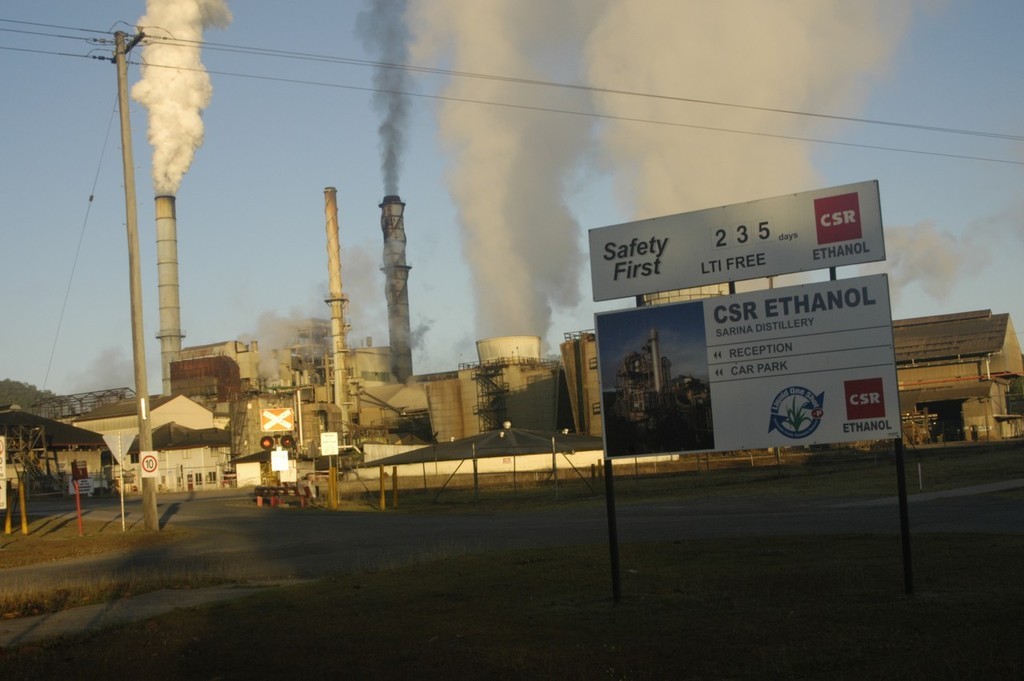
Ethanol - causing division among the boating community and even experts over its benefits and pitfalls. image courtesy Dr. Gary Fooks MIAA
As regular visitors to Powerboat-World will know, we have been alerting readers to the dangers of using the fuel additive ethanol, marketed as E10 at service stations.
Thankfully, we have had some expert advice in preparing news on E10 and the dangers it can deliver to marine engines, particularly from an acknowledged expert in the field, Gary Fooks.
Another with considerable expertise is Ken Evans, director of training and of outboard sales and service with Mercury Marine in Australia, New Zealand and the Pacific Region and one of the Australian boating industry’s best-known identities.
Evans has recently been visiting Mercury dealerships across the nation to bring them up to date on the E10 question.
To achieve his aims, he prepared a detailed paper on the E10 question and with his permission we can now deliver it exclusively right here on Powerboat-World.
Read and absorb, for your good and the good of your engine.
E10 – dangers and precautions necessary
Many boat owners in recent years have unknowingly used gasoline blended with too high (unsafe) levels of ethanol alcohol.
Running on gasoline with more than 10 percent alcohol in a marine engine will cause performance problems and can also cause permanent damage.
Understanding the dangers and effects of alcohol/gasoline, in addition to following all the necessary marine fuel system precautions, is now vital to avoid any problems with E10 gasoline.
There has been much controversy, misinformation and confusion since the recent (2006) increased distribution of ethanol gasoline in Australia, the United States and other countries.
Recent marketing gimmicks overseas by some fuel additive product companies have confused boaters even more.
These advertisements falsely claim their new products can 'fix' or 'repair' ethanol water-contaminated fuel – but phase-separated fuel CAN NOT be fixed and must be discarded.
Even high-level, reputable government authorities have recently published information that conflicts with previous articles and bulletins written some years ago on the ethanol subject.
Marine manufacturer fuel recommendations (e.g. owners’ manuals), which in the past often warned against using alcohol fuels, now document that up to 10 percent ethanol in gasoline is acceptable.
As more people are using E10, the necessary precautions and dangers are becoming more apparent and better documented.
Boaters looking for instant answers and solutions, however, will not find them.
Increased knowledge and following all necessary precautions, however, can spare boaters from most of the inconvenience and problems associated with alcohol/gasoline, or E10.
All reputable authorities agree that running on gasoline with a higher than 10 percent level of ethanol will cause motor damage and/or performance issues with gasoline-powered engines and it is always unsafe to operate on contaminated fuel.
Prevention is the best weapon against ethanol gasoline.
It’s worth taking a look at the basic background of ethanol fuel.
E10 is a gasoline that has been blended with up to 10 percent ethanol alcohol and it is now in use in many countries around the world.
Australia is also moving through government legislation to ethanol blended unleaded fuels at a maximum 10 percent E10 level, while in other countries E25,E50 and E85 are available.
Ethanol, or ethyl alcohol, is made from corn, sugarcane, wheat, switch grass and other grains.
Alcohol is an excellent cleaner, solvent, anti-freeze and, most importantly, is hygroscopic, meaning it will absorb large amounts of water.
Australian Government regulations and laws for ethanol use and labelling differ from state to state and are now constantly changing.
The most serious boat engine problems reported from overseas and involving ethanol use have mainly occurred due to illegal amounts of ethanol (in excess of 10 percent) being added at the refineries prior to delivery to fuel outlets.
Since using more than 10 percent alcohol in gasoline is dangerous, it will invalidate all marine engine company warranties.
Many ethanol problems reported by boaters appear to be due to a lack of knowledge or information on how to properly manage alcohol fuel.
Recent boat engine breakdowns reported a directly related to the mismanagement of E10.
A marine mechanic may not even suspect or test fuel as a possible cause of breakdown and many marine engine repair businesses have flourished as a result of ethanol gasoline damage.
Several older engines simply can not use any fuels that contain alcohol, while certain fibreglass fuel tanks, most those manufactured prior to 1992, will decompose from E10 use.
Fortunately, outboard engines manufactured in the last five-years have been designed to be more compatible with alcohol fuels.
There are reasons why boat engines have more problems with ethanol gasoline.
Boaters often store fuel in tanks longer than recommended for E10 (40 days, maximum, less in hot, humid conditions).
Automobiles, unlike boats, usually experience a full tank every week or two, often successfully preventing the possibility of water contamination/phase separation.
Of course, boats 'live' in a water environment and alcohol fuel loves to absorb water.
Ethanol gasoline can absorb large amounts of water into the fuel tank; lead, previously used as a stabiliser in conventional gasoline, did not absorb water.
Also, boat engines usually last longer than auto engines and owning and using marine engines from the 1970s and 1980s is not uncommon.
These older engines, of course, including their components and the fuel tanks, were not usually designed or tested to withstand the damaging effects of alcohol gasoline.
Several earlier engines, primarily those made prior to 1992, have plastic and rubber parts and fuel tanks that are not compatible with alcohol fuel.
Ethanol’s adverse effects on boat engines involve all types of performance issues and disintegration and deterioration, drying and clogging or engine components.
There are numerous signs and symptoms indicating ethanol damage; stalling, prematurely worn engine parts, rusting, clogging of fuel filters and carburettor jets, release of sludge throughout the engine, frequent water contamination/phase separation and eventually complete engine breakdown.
Ethanol can cause an engine to run lean, due to water, which sinks to the bottom of the fuel tank and can get picked up by the fuel system.
Vapour lock, or 'fuel starvation', is common when using ethanol fuels.
This all comes about due to the previously mentioned ‘phase separation’, when the weight of the ethanol and any water it has absorbed sinks to the bottom of the tank where it gets picked up by the fuel system.
Even a small amount of water can cause harm to the fuel system.
Using a higher concentration of ethanol increases performance issues; increased stalling, misfires, lack of acceleration and difficulty in maintaining boat speed when trolling.
The most reported and troublesome issue with using E10 has been regarding the decomposition of fibreglass fuel tanks.
There is really no solution to this issue other than replacing the tank, an expensive and time-consuming proposition (lining or sealing the tank is sometimes possible).
Beware – it is dangerous to use greater than 10 percent ethanol in marine engines!
Some gasoline supplies are ‘illegally’ much higher; check your gasoline with an alcohol fuel test kit to ensure ethanol present is less than 10 percent.
A recent post on a Long Island, New York message board stated that….'Believe it or not, some fuel samples tested 48 percent ethanol and most were above the 10 percent al
If you want to link to this article then please use this URL: www.sail-world.com/62509