Taste of the Shannon
by Carl Hyland on 6 Mar 2012
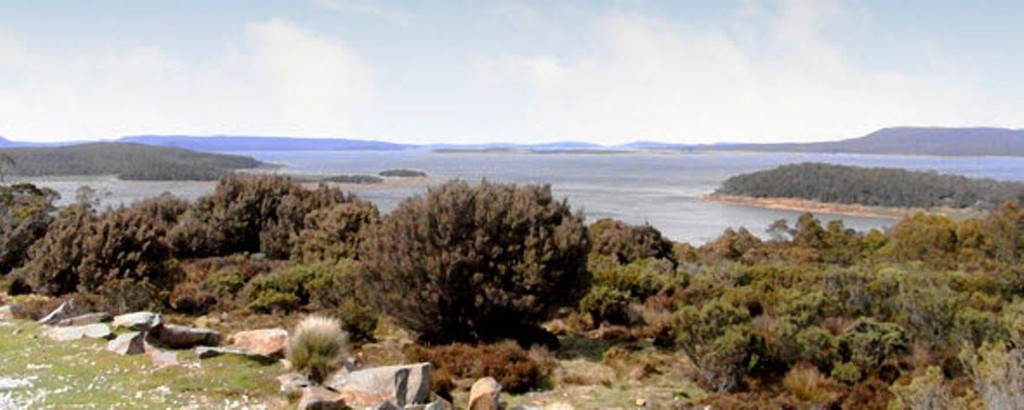
The Great lakes of Tasmania. Carl Hyland
In the 1950’s in Tasmania, there was a phenomenon known as the Shannon Rise. Here, I have obtained some information about this fascinating event.
Parson Knopwood, an angler, was among the keen fishermen of early settlement, catching flathead, cod, crayfish, and 'parrot fish'. Colonists continued to enjoy such fishing, but it was felt that these did not offer real sport, and from 1841 acclimatisers tried to introduce salmon and trout. Finally, Salmon Commissioners were appointed, hatching boxes and breeding ponds were built at the Salmon Ponds, and in 1864 James Youl successfully brought trout and salmon to Tasmania. I now fish with his great grandson Bob Youl. By 1870, fish had been released into a number of rivers and Central Plateau lakes. Trout flourished, though salmon did less well, and fishing licences were established in 1870.
In 1910 TB Simpson, who regularly fished at Great Lake, introduced dry fly fishing to Australia, though English flies were not always successful. Tasmanian Dick Wigram built on this start, inventing many exquisite flies to match the local hatches. His Trout and Fly in Tasmania (1938) became the standard work. This book, which is very rare, is now a celebrated collector’s item. Of course many fly writings of the time mentioned the great Shannon Rise and this is explained below.
The Shannon River downstream of the Miena Dam supported a fishery phenomenon renowned across the world and is of great historical significance for Tasmanian anglers. The phenomenon resulted from water releases from Great Lake which promoted the mass emergence of caddis flies, namely the snowflake caddis (Asmicridea grisea) in the river as it joins Shannon Lagoon. The Shannon Rise was established in the 1930’s as a result of the development of the Miena Hydro scheme and the releases of water down the Shannon River. These releases contributed to the establishment of a prolific snowflake caddis fly population. Fishing for significant numbers of well-conditioned brown trout during the emergence of the caddis fly adults was considered a premier feature of the Tasmanian trout fishery.
The decline of the Shannon Rise began during the mid-1950 as water release patterns changed and became irregular. The commissioning of the Poatina Power Station in 1964 and the subsequent cessation of major releases from the Miena Dam down the Shannon River was responsible for the eventual demise of the Shannon Rise. At the same time, the Shannon Rise attracted fishermen from around the world. At first unremarkable, this half-mile stretch of the Shannon River was altered by a Hydro-Electric Commission dam (1911), in a way which greatly attracted the snowflake caddis fly.
As these hatched in December, they in turn attracted trout, which became large, provocative and elusive, and the challenge of catching them attracted many anglers, not only from Tasmania but around the world. ’The hatch is on’ was telegraphed around the world which in turn bought anglers from every corner. Pictures circulated of anglers standing shoulder to shoulder along the length of the Shannon, catching huge trout. Hydro activity created other popular fishing areas, such as Little Pine Lagoon (1954) and, later the new Lake Pedder (1972), and again in the late 1950s, the Hydro began diverting water from Great Lake, destroying the Shannon Rise, to the regret of many anglers.
The Derwent Anglers' Club (1879) was the first of many fishing societies, transport improved, accommodation was built, journalists praised fishing in the Central Highlands, H Anderson's Guide to Trout Fishing in Tasmania (1900) gave advice, the Northern Tasmanian Anglers' Association (about 1900) stocked northern waters, and fishing flourished both among locals and tourists. Most fish were caught by natural bait or lure.
Fishing became even more popular in the 1950s. David Scholes' books, notably Fly Fisher in Tasmania (1961), helped cement the island's status as one of the world's leading venues for fly fishing. However, there was little in the way of a tourist industry, with no private waters, only a few rudimentary anglers' lodges and no professional guides. In the 1970s this began to change.
In 1974 Noel Jetson became Australia's first full-time trout guide, and Jason Garrett created London Lakes, Tasmania's first private fly fishery, in marshy land east of Lake Echo. Many experts regard it as one of the best in the world, and it was the venue for the 1988 World Fly Fishing Championships. More guides set up, and more private fisheries were established, such as the Snowy Range Trout Fishery south of Hobart. Many Tasmanians represented Australia in fly fishing, such as Jason Garrett, Shayne Murphy, Jan Spencer and Peter Hayes. Books and magazines proliferated, and in 1995 Robert Sloane launched the internationally-distributed magazine FlyLife.
[Sorry, this content could not be displayed]
http://www.flylife.com.au/
If you want to link to this article then please use this URL: www.sail-world.com/94563