Heavy Metal contamination in Tasmania's River Derwent still an issue
by Carl Hyland on 1 Nov 2011
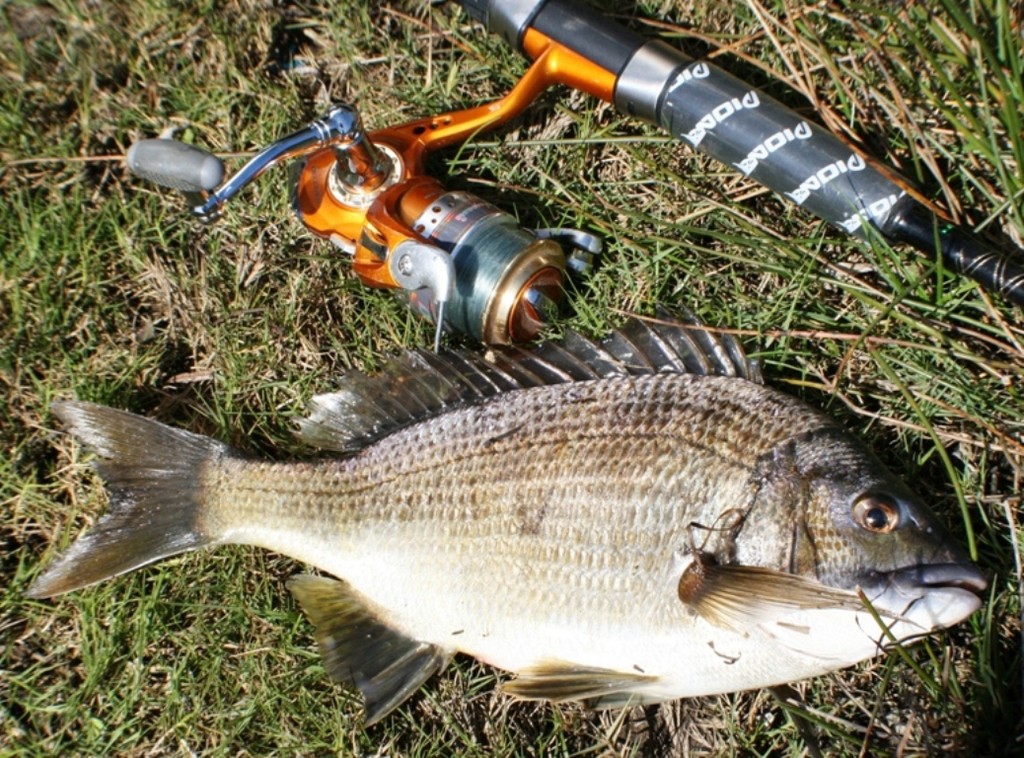
Fish like this might be off the capture list? - Tasmania this week. Carl Hyland


Do NOT eat any shellfish from the Derwent estuary, including Ralphs Bay,
Do NOT eat black bream from the Derwent Estuary and Browns River.
Limit consumption of flathead and other Derwent-caught fish to: No more than TWICE a week*
*For a recommended serve (adult -150 grams and child – 75 grams)
No more than ONCE a week for:
- Pregnant and breastfeeding women and women planning to become pregnant
- Children aged six years and younger
What is the history of heavy metal monitoring in Derwent estuary fish (flathead) and shellfish (wild mussels and oysters)?
Several broad-scale surveys of Derwent estuary fish, shellfish and other biota were carried out in the early 1970s, when heavy metal levels were at their peak. These early surveys identified flathead, oysters and mussels as the preferred species for routine monitoring.
Flathead are considered to be a good indicator of mercury levels in Derwent seafood as they largely live in the estuary year-round and are bottom feeders. Flathead are also the most targeted species in the region by recreational fishers. Filter-feeding shellfish such as oysters and mussels are also good indicators of environmental quality due to their ability to filter approximately five litres of seawater each day.
Heavy metal levels have been monitored in Derwent oysters, mussels and flathead for over 20 years by the zinc works at Risdon (now managed by Nyrstar), as a condition of their operating permit with the Environmental Protection Authority (EPA). Results of these and other surveys are regularly published in Nyrstar’s Environmental Management Plans and associated annual reports, as well in Derwent Estuary Program (DEP) Report Cards and Technical Reports (see State of the Derwent Report 2009 for details).
Mercury levels in Derwent-caught flathead have been found to be close to or slightly above national food safety standards for many years, while heavy metal levels in oysters and mussels have been considerably in excess of these standards.
What new information has been collected on metal levels in other recreationally targeted fish from the Derwent estuary?
In 2007, the DEP initiated a pilot survey to measure heavy metal levels in several other recreationally targeted species (bream, estuary caught trout and mullet) in collaboration with the University of Tasmania and Nyrstar Hobart Smelter. This study was supported by a Tasmanian Government Fishwise grant and published as an Honour’s thesis at University of Tasmania (Verdouw, 2009).
Results of this survey indicated that average mercury levels in bream taken from the Bridgewater area were about three times the recommended food safety standard of 0.5 mg/kg. Mercury levels in sea run trout taken from the area between New Norfolk and Bridgewater were also found to be slightly above the food safety standard, as were mercury levels in flathead. Mercury levels in mullet were generally low.
Based on this pilot survey, precautionary health advice was issued in 2007 by the Director of Public Health
(DHHS) to avoid eating Derwent-caught bream and to limit consumption of flathead and other Derwentcaught fish until further studies were carried out.
Between 2009 and 2011 mercury levels were measured in seven recreationally-targeted fish collected from the Derwent estuary: bream, flathead, trout, Australian salmon, whiting, cod and flounder. This work was carried out in collaboration with the Institute of Marine and Antarctic Studies (IMAS), Nyrstar, DHHS, Inland Fisheries Service and community/recreational fishing groups Fishcare and TARFish.
The study confirmed that mercury levels in Derwent estuary bream are very high – more than twice the recommended food safety standards. Mercury levels in flathead and trout are slightly above the food safety standards. Mercury levels in Australian salmon, mullet, whiting, flounder and cod were below the food safety standards; however this was based on a limited number of samples, and should be considered indicative.
Is it ok to eat bream from Browns River?
Browns River is a popular bream-fishing area in Kingston. In 2010/11 18 legal sized bream from this area were captured for analysis of mercury levels, targeting larger fish. Lab results indicate that while MEDIAN mercury levels in Browns River bream were somewhat lower as compared to bream from the upper estuary, some of the larger fish had mercury levels nearly twice the recommended level. Recent fish tagging studies by University of Tasmania scientists have shown that bream from the upper estuary sometimes move down-river to Browns River, which may account for these high levels. Because of this, DHHS has extended the health advice against eating Derwent-caught bream to Browns River. Further surveys would be needed to provide more specific advice on Browns River bream.
What is the status of recreational fishing in the Derwent?
The Derwent is a very popular recreational fishery, particularly for flathead, bream and sea run trout. Many consider the Derwent estuary to have one of the best bream and sea run trout fishing in Australia, with an abundance of very large fish. The bream fishery in particular is being nationally promoted as a catch-and release sport.
The recovery and popularity of the Derwent’s recreational fisheries is good news, and reflects the considerable investment by councils, industries and government in wastewater treatment, stormwater management and habitat conservation.
However, recreational fishing still needs to be managed in the context of the legacy of heavy metal contamination in the sediments, and good public information and awareness about seafood safety is essential.
Why are heavy levels elevated? Are these declining? When can we expect the health advisories to be withdrawn?
The heavy metal levels in Derwent seafood are a reflection of the high heavy metal levels in the Environment, particularly the contaminated sediments at the bottom of the estuary that accumulated over a period of 60 to 70 years. Although there have been substantial reductions in the metal loads discharged into the Derwent due to improved industrial practices, it will take time for levels in the sediments and seafood to respond.
Heavy metal levels in Derwent fish and shellfish tend to fluctuate from year to year in response to a number of factors including inputs, estuarine conditions (e.g. oxygen levels, flood events) and biological factors (e.g. fish size). The trend in heavy metal content in wild caught Derwent shellfish (mussels and oysters) is variable at different locations around the Derwent (see State of the Derwent Report 2009 for details). In 2010 the Mercury levels in flathead increased. Further work is required – and is currently underway – to better understand the processes by which heavy metals enter the food chain While we anticipate further improvements in water quality within the next five to ten years, the response time for improvements in sediments and seafood may take longer – probably in the order of decades.
What is being done to improve the situation?
Over the past 20 years, significant progress has been made to reduce heavy metal loads associated with industrial practices at the zinc smelter site, through process changes, wastewater treatment, covering of stockpiles and – more recently – management of contaminated soils, stormwater and groundwater. This has resulted in an estimated 95% reduction in heavy metal inputs from the site since 1973.
The DEP’s recently completed Water Quality Improvement Plan (WQIP) for heavy metals indicates that continued remediation of contaminated groundwater at the zinc smelter site should further reduce levels of heavy metal contamination in the Derwent. Nyrstar has recently completed a $2 million capital works program to capture and treat contaminated stormwater and is extending groundwater remediation works to other areas with contaminated groundwater.
Other recommended actions of the WQIP include careful management of metal contaminated sediments to avoid resuspension, and management of other pollutants such as nutrients and organic matter to avoid low oxygen events (which could cause metals to be released from the sediments).
What will happen next?
Flathead will continue to be monitored annually by Nyrstar Hobart Smelter and shellfish every three years.
These results will continue to be reported by the DEP, and health advisories from DHHS will be updated accordingly.
In addition, a PhD study is currently underway at the University of Tasmania to better understand how mercury is transferred through the Derwent estuary food chain.
Heavy metal levels in Derwent estuary sediments will be resurveyed in 2011 and 2012 to assess heavy metal distributions and trends in surface sediments. This was from a brochure released last week by the Director of Public Health in Tasmania.
Further information is available from www.dpipwe.tas.gov.au (go to Sea Fishing and Aquaculture)
[Sorry, this content could not be displayed]
If you want to link to this article then please use this URL: www.sail-world.com/90241