Spanish Castle to White Night
by Mark Chisnell on 30 Mar 2012
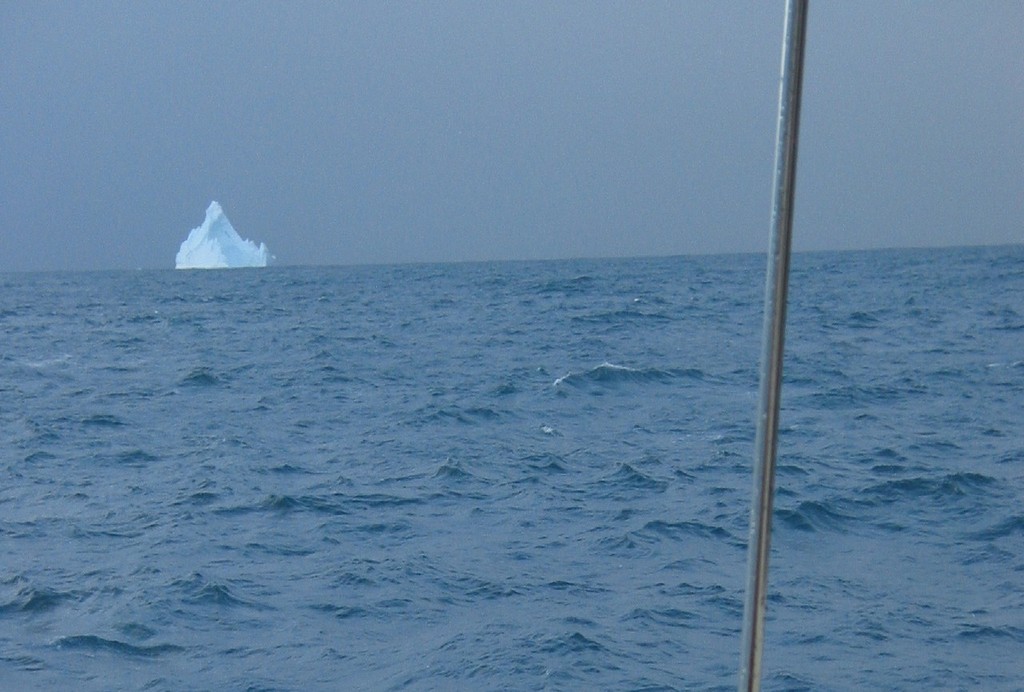
Southern Ocean Hazards Mark Chisnell
Eighty eight men left from the ramparts of Alicante's Castle of Santa Bárbara, but only 36 would journey the full 37,000 miles to finish in the White Nights of St Petersburg. Japan's Black Tide, brutal weather, injuries, and even the credit crunch all took their toll.
This is the story of the Volvo Ocean Race 2008-09, ripping and roaring through the seven seas - from Spain, past Africa and onto Asia, round the Americas and back to Europe. It's a story of endurance, deprivation and adventure, a story of winners and losers, those who made it and those who didn't.
Available from the Volvo Ocean Race website in English and Spanish as a coffee table edition, and now as a text-only eBook available from all good eBook retailers; Amazon.com, Amazon.co.uk, BarnesandNoble.com, iBookstore, Sonys Reader Store, Smashwords.com and Diesel.
Winner of Sportel Monaco 2009 Award: Best Illustrated Book.
Spanish Edition: Del Castillo Español a la Noche Blanca
Nordic Edition: High Seas, High Stakes: The Race Around the World
Reviews
'I doubt I'll ever circle the globe in a racing boat, and I'm not sure I even want to, but Mark Chisnell has made the experience real. This is a marvellous book about a great adventure, and anyone fascinated by sailing should have it on their shelf.'
Bernard Cornwell
'Racing around the world looks as though it has progressed significantly since I had a go on Drum in '86; certainly on a technical level. As you can see from the pictures in Mark Chisnell's book, the boats are lighter, faster and sailing more on the edge than ever before. But the experience of the men who sail them, remains the same. It's muscle and nerve and the will to win, to get you across a big, big ocean. There's a whole lot of seawater out there to drive you crazy as you go around.'
Simon Le Bon
'Emotions, tactics and conditions are brought to life for the reader throughout and, whether you are a sailor or not, you will find yourself carried around the world on a captivating journey.'
Dee Caffari
Writing Spanish Castle
I made the decision very early that if I tried to write about everything that happened to everyone, I would end up with a long list of disconnected events happening to disconnected people, without any context or meaning. The only way around it was to pick a smaller group to follow through the whole nine months. It was a tough thing to do, I had a lot of friends sailing and working on this race, and the decision meant that some of them would only appear in the crew lists in the appendix. But there was never any doubt that telling more of the story through fewer people would make for a better book.
The next problem was whether to pick the group before the start, or allow it to form as events and personalities unfolded. I chose the former, largely because the intense schedule of the race, for which I was also writing daily website reports (the Ten Zulu Report) would make the alternative a much harder path. The decision meant that I could do all the background interviews before the start in Alicante, getting the biographies of each of the chosen crewmen.
It also allowed me to do something else, and that was part two of the plan for the book. I'd come up with a list of stuff that I wanted to cover, a mix of background information (like how the watch systems worked), along with likely events that would befall the crew (like breaking something). So part of choosing the crew was not just to get a diverse group of nationalities, personalities, ages and backgrounds, but also to make sure that I had someone that could be the book's expert on each of the topics.
So the interviews in Alicante all included background questions on whatever technical subject I'd chosen for the individual - sticking with the example of the watch system, I talked to Neal McDonald about this in Alicante, an interview that was eventually used in the chapter, Broken Rhythms, about leg six.
No Skippers: If there was a controversial aspect to this plan, it was that I didn't include a single skipper in the group of people that I'd chosen to follow. There were many good reasons for this, but the one that loomed largest at the start in Alicante was that if I'd chosen one, I'd have had to use them all, or be accused of favouritism by the teams. And with eight skippers making up the bulk of the group, the book would have had a very different feel.
And subsequently, I was only too conscious during the race of the number of times that I wrote for the website 'Torben Grael', 'Ken Read' or 'Ian Walker', when I actually meant the boat and all the crew (and sometimes the shore teams as well). Sailing distils the contributions of many into the adulation (or vilification) of just one person like few other sports. I wanted to get past that, to open the race out, and give people a feel for the huge range of characters and skills that were involved.
After all, the skippers had plenty of opportunity to force their way into the narrative. They were encouraged to write daily emails from onboard, and were interviewed more times than most of them would care to count. I listened to, or read, much of this material, and a lot of it informed the story.
So that's how the book was written, weaving the predetermined topics and biographies into the narrative of the race as it unfolded; through the weather and daily position changes, the emails, photos and reports from the boats, and the many interviews done with the crews by myself and others. In the end, the book covered everything that I hoped, but not in as much depth - it could easily have been twice as Mark Chisnell website
If you want to link to this article then please use this URL: www.sail-world.com/95464