America's Cup - Cyclors go to dark places
by Emirates Team New Zealand on 15 Jun 2017
Emirates Team New Zealand - America's Cup 2017 Emirates Team New Zealand
http://www.etnzblog.com
For a bright and sunny tropical paradise like Bermuda there’s an awful lot of talk about dark places and those who visit them.
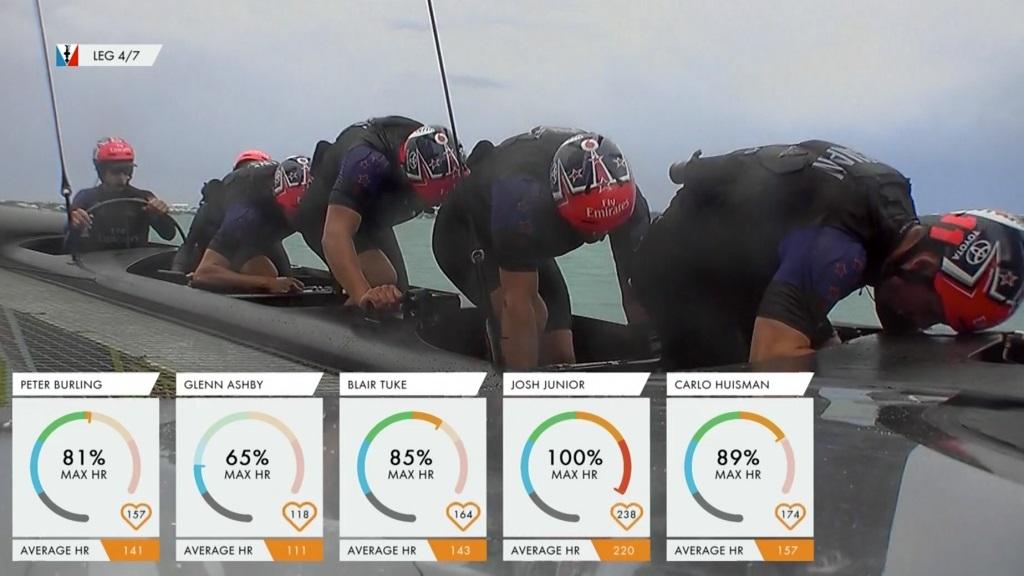
The visitors are the cyclors at Emirates Team New Zealand, so- called because they are cycling sailors who provide the pedal power to generate the hydraulic pressure which drives the AC50 foiling cat.
Their journey into those dark places is led by 28 year old Simon Van Velthooven, a New Zealand track cyclist from Palmerston North. A bronze medallist in the men’s Keirin at the London Olympics, he was recruited by Emirates Team New Zealand to work on their pedalling programme.
“What I brought to this team was just knowing what training needed to be done to power the boat after trialling 18 months ago with the hydraulic pump,” says Van Veltooven who sits on the Number One seat of the four in the on-board peleton. “It’s not like a bike at all. You are pulling and pushing a dead weight and you need to train the muscle to do the right movements. So it was a learning curve for me as well as the team to actually train your body to power the pump.”
What they learned is that to produce the maximum power they had to push their bodies beyond the red zone and into those dark places, a journey that’s produced some strange after effects.
Olympic gold medal rower turned cyclor Joe Sullivan finds he loses his sense of taste when he’s driven himself over the edge in training: “Sometimes your ears pop and you don’t really know what’s happening and you can lose your sight towards the end and you can definitely lose your hearing a little bit,” says the 30 year old former fireman.
“It’s just putting yourself into pain really. In rowing it was easy. As soon as you start the race you are hitting the red zone. You are in a lot of pain from the start and it’s just managing it and keeping into the zone where you don’t feel and just keep pushing and sailing it’s much the same.
” It’s pretty similar to anger. It’s hard to explain really. You are just really pushing everything that you’ve got and really single focussed nothing else really matters apart from that one goal of putting out as much power as you possibly can. So everything kind of falls away around the outside of you and just one thing and doing the best as you can.”
The real challenge, though, is knowing your limits because the aside from pedalling on the edge of the red zone to keep up the hydraulic pressure they also run nimbly across to the other side of the boat as they tack and gybe.
Van Velthooven again on Sullivan :”When he goes into these dark places he doesn’t know what’s going on and sometimes in training he can’t see after doing a big effort. So he knows how to push himself. But when you are pushing as hard as you can and you’re told it’s time to run across the boat you got to keep your conscious 100 per cent or else you’re are falling over the front or off the back so you just go to make sure you’re just right on that limit of going into paralysis and still being able to run across the boat.”
And like Sullivan rates rowing as much easier by virtue of being in one place on his scull, so the track cyclist sees regular biking as a simpler discipline compared with that of a cyclor: “For sure you can push yourself more on the bike because you know you don’t have to run across a boat at 40 knots. Just running across the boat and using your muscles in a different way puts you in that red zone because you are just on the limit. And then you have to get out, run across holding onto the wing looking down at the daggerboards, jump onto the tramp and into your seat then click back in…all while the boat is shunting around and ducking and diving. It’s great fun but you’re definitely got to keep your wits about you.”
The cyclors reckon taking it to the limit is the only way to know your limit and it is a painful process. Sullivan: “It hurts it a lot. It definitely destroys muscle and you need a lot of recovery afterwards. It’s not something you can do a lot over and over and it’s going to be a difficult thing because the America’s Cup is over a length of time so recovery is going to be extremely important - rest and making sure you are eating the right foods and keeping hydrated.
And for these two cyclors there is gain from pain….their Olympic medals the proof.
If you want to link to this article then please use this URL: www.sail-world.com/154651