
Forestay versus Backstay - The Key to Upwind Performance
by Cyclops Marine 2 Nov 09:00 PST
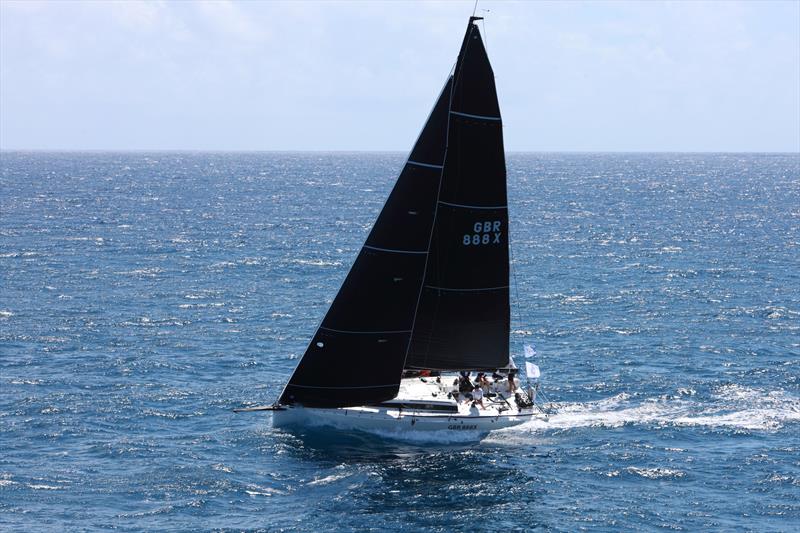
RORC Caribbean 600 © Tim Wright /
www.photoaction.com
When it comes to upwind performance, getting your rig setup right is fundamental to achieving optimal sail shape.
Two of the most important loads to understand are forestay and backstay.
Forestay tension: The secret's in the sag
As four-time Volvo Ocean Race winner Stu Bannatyne puts it: "Matching forestay tension to the wind and sails is the key to upwind performance."
If you're only monitoring one load onboard your yacht, it's likely to be forestay tension. Having an idea of your forestay tension can reveal a picture of the overall dynamic balance of loading throughout the rig and you can make significant gains by optimising it.
In lighter conditions, lower forestay tension generally allows more sag, creating a fuller headsail and generating more power. As the breeze builds, increasing forestay tension reduces sag, flattening the headsail and helping manage excess power and drag.
The objective is to achieve the right amount of sag for the conditions. Measuring forestay load provides a precise, repeatable reference, especially when paired with a polar chart of optimal loads for a range of conditions.
With a smarttune installed on the forestay, the trimmer can see live loads via onboard displays, helping them perfect sail shape on the fly.
Backstay tension: The full picture
On many racing yachts, backstay tension is a primary control for both forestay sag and mast bend, influencing the shape of the headsail and mainsail simultaneously.
- Low loading on the backstay maintains a straight mast and a deep mainsail, ideal when searching for power.
- Higher load on the backstay increases forestay tension, reducing sag and inducing mast bend. This flattens the mainsail, ideal for when the yacht is overpowered.
But its significance depends on the rig. On a masthead rig, increasing backstay tension generally translates relatively directly into greater forestay tension. On a fractional rig, increasing backstay tension often produces more significant mast bend, while the resulting change in forestay tension depends on the rig's geometry and supporting rigging. This means two boats with the same backstay load won't necessarily have the same forestay tension or sail shape.
More on smartlink
Understanding the balance: Why measure both?
Measuring both forestay and backstay load helps the crew understand how adjustments to one influence the other. Rather than relying on backstay settings alone to estimate forestay tension, trimmers can see the actual loads and establish repeatable targets for different conditions.
Other controls, including shroud tension, mainsheet and traveller settings, also influence sail shape and power. But understanding forestay and backstay loads provides a valuable foundation for more precise upwind rig tuning.
By monitoring forestay and backstay loads alongside wind conditions, sail selection and boat speed, crews can identify the combinations that deliver their fastest upwind performance. Those settings become repeatable targets, helping trimmers respond quickly as conditions change and making it easier to communicate optimal settings across the crew.
Explore further
For downwind sailing, code zero luff tension, mainsheet and halyard loads all become important performance indicators, with Cyclops sensors providing solutions for different measurement points.
If you have a question about this article, or about critical loads for performance, talk to a Cyclops expert.
Or find the right Cyclops sensor for your boat.