Island Cruising Assoc - Offshore Cruising Electrical Prep - Part 1
by J Martin & C Pawson (Enertec Electrical) on 10 Mar 2016
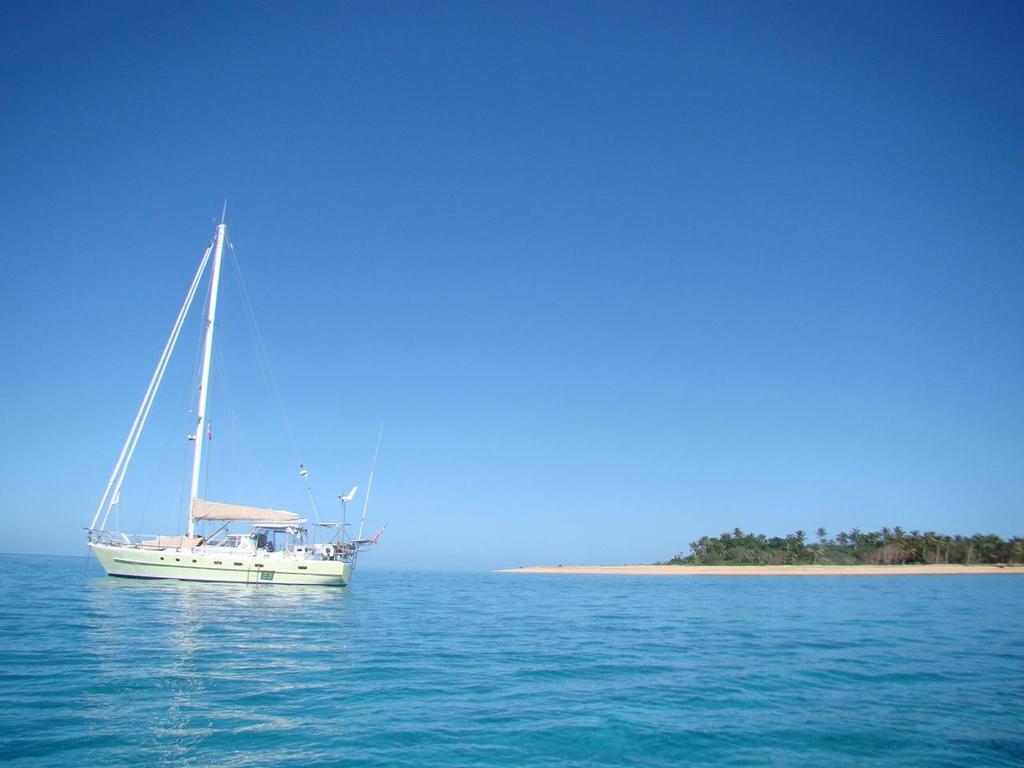
Getting electrical issues repaired is not always easy when cruising offshore Island Cruising Association New Zealand
Apart from the occasional purist who still run on oil lamps the electrical system for the modern cruiser is arguably the most important system on the boat. With our dependence on power increasing each year if this system can’t cope or in worst case goes down completely NONE of the other systems aboard will function.
Many of us harbor a secret (or not so secret!) yearning to cast off the dock lines and head off on an adventure to ‘The Islands’. Palm fringed coral atolls white sand beaches swaying palm trees. Sound idyllic but is our current boat up to the task.
Many may be structurally capable of such trips, often with relatively minor alterations and the addition of appropriate safety equipment. An experienced boat builder or surveyor would be able to advise on any individual vessel’s suitability for such a trip.
Yachts used locally tend to sail predominantly in daylight hours and for relatively short journeys. It would be unusual to sail for a full 24-hour period for instance. Few boats under 40ft would have full chain anchor warps and have large water and fuel carrying capacity. The extra weight burden of equipping a local cruiser for offshore will see the displacement increase significantly by the time extra food, water, fuel and other equipment is added.
The majority of aspirant offshore yachtsmen and women dream of warm water, tropical climates and gentle breezes. Unfortunately it is these attractive environmental conditions that can impose previously unseen stresses on the shipboard systems.
Unlike the gulf cruiser, the offshore boat is unlikely to be able to connect to a shore power outlet to recover its batteries. Nor can it readily find a hose with an interminable supply of potable drinking water to replenish its water tanks.
Experienced tradespeople that arrive in their van in response to an urgent call to repair failed instruments, charging systems or the plethora of other complicated components are non existent in remote anchorages. A greater deal of self-reliance will be required.
A good understanding of the basics of electricity and plumbing can reduce maintenance costs and enable a practical owner to carry out many repairs independently. Modern communication has transformed the accessibility of qualified help via the internet so a good relationship with your original equipment suppliers can prove invaluable as most will be willing to talk through problems and expedite any necessary spare parts to your nearest port location.
Chances are however that equipment and electrical systems may need adding to or modification.
In this article we will consider the electrical system and other equipment that will impact on it.
The addition or increased use of items such as autopilots, radar, satellite communication, HF radio, inverter, computer etc, will increase the demand on the battery bank and almost certainly result in a larger capacity being required. The higher ambient temperatures will mean the demand from any electrically powered refrigeration will also significantly increase. With this larger bank the ability to recharge may well be compromised with existing alternator(s) size.
In offshore applications it is even more important to limit the daily depth of discharge to a maximum of 50% of the bank’s capacity. Should there be a complete failure of charging systems there will still be a reserve of capacity left to maintain a limited communication and navigation capability. By only discharging to 50% your battery life will be extended even better is a 25% discharge regime which will see an even greater lifespan achieved.
It is strongly advised that a battery capacity meter be fitted allowing an accurate determination of capacity remaining at any given time. These meters will not only give voltage and current readouts but show battery capacity in amp/hours, much like a fuel gauge in a car. Voltage measurement alone is a poor indication of state of charge. These meters need to be correctly installed and programmed for the individual battery type and capacity. If this is not done erroneous readings may result.
International Category 1 offshore requirements strongly recommend batteries be of the VRLA type. More commonly recognized as Gel or AGM, these batteries have an immobilized electrolyte and under normal operating conditions will not gas to atmosphere. The primary advantages of this type of battery are no explosive gases generated during charging and no electrolyte to spill into the bilge should the vessel suffer a knockdown.
Our coastal cruiser will typically have a single engine alternator for charging house and start batteries. While this is adequate for local cruising it provides no redundancy for offshore applications. If possible a second alternator should be fitted and equipped with a ‘smart’ alternator regulator. This alternator should be dedicated to the house battery bank and be sized at approximately a quarter of the capacity of the battery bank, ie; a 400A/Hr battery bank should have an alternator of 100A. A smaller alternator will result in longer re-charge times.
Alternative energy sources such as solar panels and wind generators can provide a useful addition to the engine alternator and depending on the installation they may provide the total energy needs for the vessel. Regardless of whether these sources can supply the total daily load it is a good idea to at least fit as much solar as possible as it may well, at the very least provide enough energy to maintain critical communication loads in the event the main engine is inoperable.
While some electrical loads cannot be reduced lighting is one area that can. If your boat has incandescent or halogen bulbs it is worth converting them to the Led equivalent. Energy savings up to 90% are achievable for a modest outlay.
Anchor windlasses should also be checked. Since a lot of anchoring is done on Coral Sea beds a total chain anchor rode is essential. A greater length of rode is also likely as water depths can frequently be greater than are encountered locally. The weight of chain deployed will mean the winch will work harder and needs to be powerful enough to cope. Electrical cabling from the battery to the winch needs to be of sufficient rating to limit voltage drop to less than 5%. Excessive voltage drop will severely compromise the winch performance and possibly result in premature failure of the windings. These shortcomings may not be evident with the vessel in local waters but can become a safety issue offshore.
Not only is it important to ensure systems and equipment are appropriate but the installation detail is equally critical. The probability of water ingress into areas previously completely dry is considerable. Salt water and electrical systems do not go well together! With the trend to lighter displacement hulls there is frequently little bilge to contain and restrain water. The result is water working its way into the back of switchboards, instruments and any other places with electrical connections. Damage due to corrosion may take a considerable time to manifest but eventually equipment will fail. Salt-water ingression would be one of the leading causes of failure of marine systems so it is worth taking precautions before setting off.
The extent to which an individual vessel gets a preparatory refit will depend on the length of time it is anticipated being away and the areas it is planned to visit. A one off trip of three months to Fiji for instance would likely trigger a less extensive upgrade than would be likely for a circumnavigation. It’s a matter of discussing your requirements with an experienced supplier/installer and talking to other experienced offshore yachties for their advice and experience. The Island Cruising Association out of New Zealand has a huge knowledge base of information and runs regular Cruising Preparation Seminars and webinars for just this type of information.
In upcoming issues we’ll focus on components of the electrical system in more detail.
If you want to link to this article then please use this URL: www.sail-world.com/142971