Sailing in the Olympics beyond 2016 - A double Olympic medalist's view
by Bruce Kendall on 29 Apr 2016
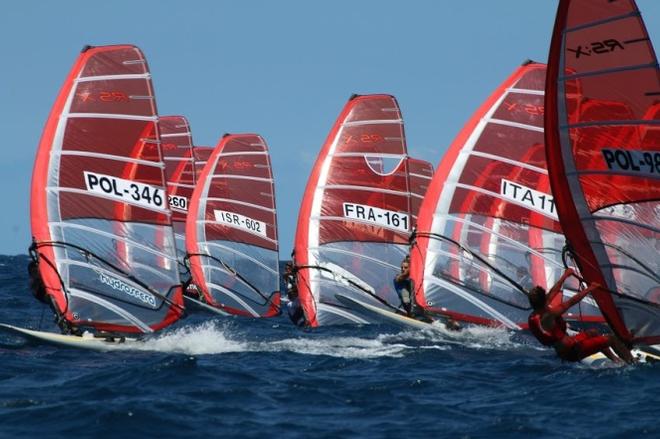
RS:X World Championships Salvatore Lopez
Gold and Bronze medallist and multiple world boardsailing/windsurfer champion, Bruce Kendall takes a look at what he believes Sailing needs to do to survive beyond the 2016 Olympics.
A key driver is the signalled intention by the International Olympic Committee to stay within its quote of 10,500 athletes, but instead of choosing 20 sports for the 2020 Olympiad, the IOC will select a basket of events that will be contested.
He writes:
Sailing needs to stay in the Olympics, so it continues to receive government funding for national development. The Olympic Status elevates sailings profile attracting more public attention to the sport while creating a goal for young people.
The International Olympic Committee has announced reforms to reduce costs for hosting the Olympic Games. Host nations and National Olympic Committees will have more say as to which event remains Olympic and National. International or National sporting bodies, such as World Sailing, may have a much-reduced
Click here for a news report on the expected changes
IOC Reforms - Item 10:
10. Move from a sport-based to an event-based programme
12. Reduce the cost and reinforce the flexibility of Olympic Games management
Context:The Olympic programme is the fundamental core of the Olympic Games. Decisions regarding the programme have an impact on virtually all other areas of the Olympic Games and Olympic Movement. These are, in particular, the success of the Games in engaging with a global audience; ensuring ongoing engagement with the youth demographic; and a direct impact on the development and participation of specific sports and disciplines. There was broad consensus not to extend the Olympic Games beyond 16 days and that the Olympic Winter Games, for reasons of sustainability and authenticity, should remain restricted to sports on snow and ice. There has been a consistent call, both from IOC members at the February 2014 IOC Session and from stakeholders of the Olympic Movement, for increased flexibility in the programme of future Olympic Games. Specifically, it was recommended to review the current specification of 28 sports, and to look at events rather than sports. The Olympic Charter currently puts a limit on the number of athletes at the Games of the Olympiad at 10,500, with an ability to vary with the Host City Contract.
New Bye-law to Rule 45 3.2 Unless agreed otherwise with the relevant OCOG, the following approximate numbers shall apply: - with respect to the Games of the Olympiad, ten thousand five hundred (10,’500) athletes, five thousand (5,’000) accredited coaches and athletes’ support personnel and three hundred and ten (310) events. - with respect to the Olympic Winter Games, two thousand nine hundred (2,’900) athletes, two thousand (2,’000) accredited coaches and athletes’ support personnel and one hundred (100) events.
Japan has dropped Paralympics Yachting for the 2020 Olympics, as it did not “meet the criteria.” An in-depth investigation may show Paralympics Sailing may be the most friendly to sport of all to those with disabilities and create the least equal level event against able-bodied people, but this was not enough to remain Olympic. In short it was expensive to run with minimal general public interest compared to other events more lucrative and popular sports Japan wanted to bring in.
Yachting:
Yachting has been and possibly still is on the list of potential sports for the Commonwealth Games but has not been included for over 30 years as the cost to run it, does not match the expected revenue from it.
There are many sports working very hard towards becoming Olympic for the first time, and many are trying to be bought back in. Many are less expensive to run and campaign and more popular and media-friendly than yachting. Strong competition against Olympic Yachting remaining Olympic is building up.
Yachting needs to realize it is more a participant sport than a spectator sport and building up fleet sizes and the number of Olympic Class competitive Olympic Member voting nations is critical to its survival.
It is clear ISAF needs to quickly and carefully reassess its primary goals.
I recommend they were in this order.
1. Manage global yachting so it remains a dynamic, strong and fair sport.
2. Maintain it’s Olympic status so it achieved point 1.
3. Grow the sport nationally and internationally to achieve point 2 and 3.
4. Generate revenue from the sport to achieve points 1, 2 and 3.
ISAF should discontinue the World Cup.
The ISAF World Cup concept is elitist, expensive and an organizational disaster for nations and individual sailors who are struggling with funding. The ISAF running the World Cup is in effect discouraging developing nations from investing in building Olympic Yachting programs.
Transporting sailing equipment around the world is expensive complex and the nations and sailors currently trying to qualify for the next World Cup event cannot plan logistics in advance without the risk of loosing money and sponsors.
Olympic Yachting is not like Tennis or Golf or Track and Field where transport of equipment and cancellation of accommodation and other bookings where a deposit is required etc is a non-issue. The European circuit is the least expensive place to build up high-quality regatta experience and the European World Cup events are an important part of the circuit where developing sailors can measure themselves against the best.
ISAF needs to be more geared to a circuit, which helps new yachting nations participate and develop. Without more nations and larger fleet sizes, ISAF increases the already high risk of being dropped from the Olympics for 2024.
A rolling world ranking could replace the world cup if the events have a ranking based on the number and quality of sailors. This encourages event organizers to grow fleet sizes and attract the best sailors.
The only World Champion should be from that year's World Championships. A World Cup winner versus World Champion titles confuses things.
World Championships should be limited to one sailing discipline to allow the opportunity to attract the biggest fleet possible. It also allows sailors the chance to compete in more than one Olympic Sailing discipline.
Growing the sport globally.
Many developing nations and sailors are only able to go to one or 2 international events. This should be the world championship and there should not be any barrier to entry. This being the case, multi-class events run at the same time such as in Perth and Santander are unable to have the infrastructure to support this concept. Laser World Champs should have fleets of 1000 or more and include masters youths etc. Weekend warriors and developing nations should be allowed to compete against the top sailors in the world – unlike what happens at the World Cup.
The regatta format should start with a race for the whole fleet.
A very large fleet starting is impressive for the media and public and attracts the biggest interest possible for the first day of racing. This race needs to be longer than normal to allow the top sailors to come through the fleet and it can pass by spectators and local points of interest for the media. This is the best event to use for seeding to reduce the fleet sizes for manageable races.
A large fleet size increases revenue for the organizers, which helps to reduce the cost of the entry fee, which keeps costs down for underfunded sailors.
During the regatta, the fleet size should be reduced and reseeded to the point on the last race of the last day, before 12 noon apart from the top 4 on the last day the rest of the fleet do their last race.
In the afternoon, the top 4 sailors race winner takes all, very short and close to the public making it easier to see and understand the whole race from the shore.
Regatta formats need to bring more racing very close to the shore [shouting distance] especially at least the finish for the last race of each day.
ISAF and Revenue collecting.
ISAF’s recent role of helping people to watch the medal races such as in Hyeres 2015 is to be commended. A video archive of all regattas along with the tracking has real value.
The more sailors competing at Class World Championships and other regattas, the better the potential revenue.
The Class Organizations should run all their own events.
The Class Organizations have the best links to the sailors needs and have a better idea of evolving formats etc. ISAF should have a rep at each major Olympic Class event to monitor format changes and help to coordinate the media and global promotion of the event. The ISAF rep will be better placed to help regulate what changes will be possible for the Olympic Games.
There should be a class appointed race officer whose job it is to run the events so that there is better consistency with start line setting and control etc.
New Olympic Classes
Many of the current Olympic Classes have not been chosen with Developing Nations in mind. Affordability and consistency of performance of new equipment needs to have a higher priority.
Rule modifications to improve spectator appeal
Some of the Olympic Classes are not exciting to watch. Active athletes are more interesting to watch than non-active ones. Kinetics [apart from paddling] should be allowed in all conditions for all classes.
Start line management to improve fairness and make the sport easier to understand.
Sailing is the only sport in the world where a competitor is allowed to start a race early and interfere with other competitors and the race result. This is unfair to those who start correctly and confusing to watch.
The starting signals need to be in front of the sailors [mostly the port end].
A port end starting vessel makes it easier to judge if the line is too biased to port. In this case, an inner distance mark should be used.
Race officers need to be more accurate and restart races when there are sailors over the line in the last minute. There are a lot of electronic and signal solutions to help prevent and manage this.
A flag could be raised the moment a boat is over the line during the last minute and bought down if all boats are behind the line. The fleet will realize the start signal will become the signal to identify who is over the line and they will be removed and the next possible start will be 5 minutes later. Those boats most over the line at the start should be removed from the next start of that race. Video cameras should be used to replay the start to help identify those most over. This video should be streamed on line for general viewing.
Boats could use the same system as the America’s Cup where a red or green light is displayed if a sailor is over the line or not. This could be a part of the tracking unit currently used for top end regattas.
If you want to link to this article then please use this URL: www.sail-world.com/144130